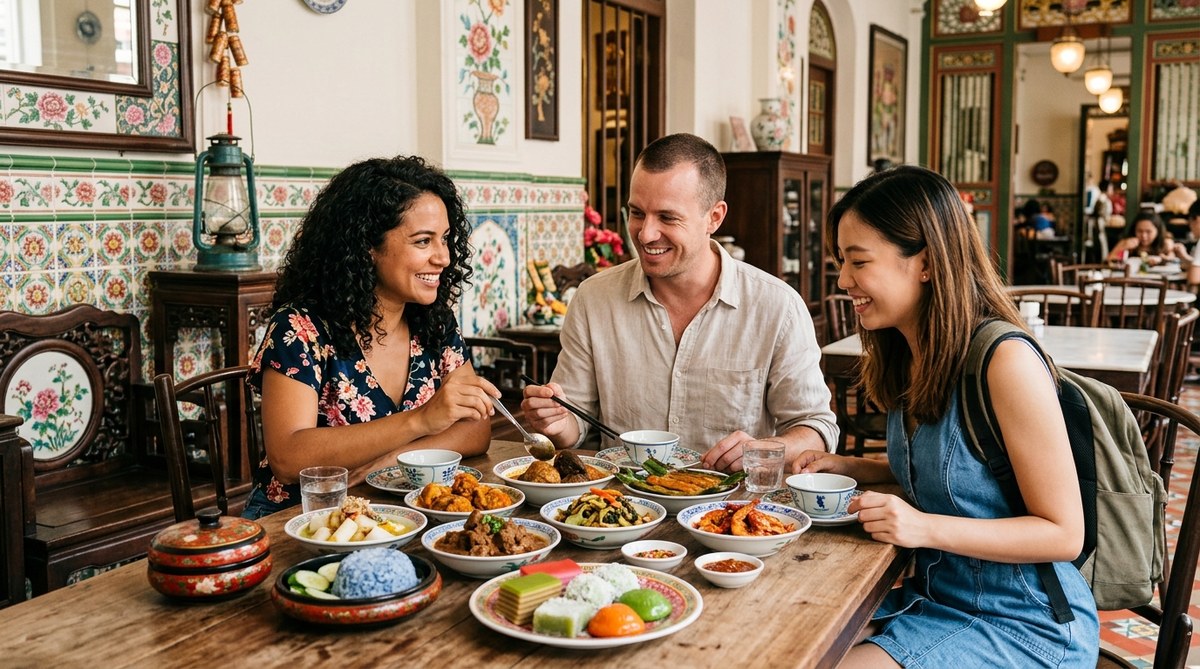
If you love food that tells a story, a Peranakan food trail in 2026 is the trip you have been waiting for. This cuisine is a beautiful blend of Chinese ingredients and Malay spices, creating bold, tangy, and aromatic dishes you will not find anywhere else. It is not just about eating. It is about understanding a unique culture that has shaped Singapore and Melaka for generations. For culinary adventurers who plan holidays around what they eat, this trail offers a deep, satisfying experience that goes far beyond a typical food tour.
A Peranakan food trail is your ticket to experiencing one of Southeast Asia’s most distinctive cuisines in 2026. From the iconic laksa lemak to the labour intensive buah keluak, every dish carries centuries of history. This guide covers the must try dishes, the best spots in Singapore and Melaka, and practical steps to plan your own trail. You will learn what makes this cuisine special and how to eat it like a true connoisseur.
What Makes Peranakan Food So Special
Peranakan food, also called Nyonya cuisine, was born from the union of Chinese traders and local Malay women in the Straits Settlements. The result is a cooking style that feels familiar yet completely original. You get the wok hei of Chinese stir frying and the coconut richness of Malay curries, all in one meal.
The flavour profile is intense. Sour tamarind, pungent belacan (shrimp paste), and sweet coconut milk work together in ways that wake up your taste buds. Unlike Thai or Vietnamese food, Peranakan dishes are less about fresh herbs and more about slow simmered, complex gravies. Every spoonful of a good laksa or a rich curry has layers of taste that unfold slowly.
For anyone serious about food, this is a cuisine that demands attention. It is not fast food. It is heritage on a plate.
Dishes You Must Try on Your Peranakan Food Trail 2026
Before you set out, know the stars of the show. Here are the dishes that define the trail.
- Laksa Lemak: This is the queen of Peranakan soups. A rich, coconut milk based broth loaded with spices like lemongrass and galangal, topped with cockles, fish balls, and a dollop of sambal belacan. The version in Katong, Singapore, is legendary.
- Buah Keluak: A black nut that is toxic when raw but becomes a delicacy after careful preparation. It is usually cooked with minced pork and herbs in a savoury stew. The texture is earthy and the flavour is an acquired taste that true foodies love.
- Ayam Buah Keluak: A chicken stew using the same nut. It is tangy, dark, and deeply savoury.
- Itek Tim: A tamarind based duck soup that is sour, spicy, and absolutely addictive. It is a staple at Peranakan celebrations.
- Kueh Salat: A dessert made from glutinous rice, pandan, and coconut milk, topped with a layer of sweet, salted bean paste. The green layer gets its colour from pandan juice.
- Chap Chye: A mixed vegetable stew cooked with fermented soybeans and dried shrimp. It is humble but packed with umami.
Where to Walk the Trail: Singapore and Melaka
The best places to experience a Peranakan food trail in 2026 are still the two historic hubs: Singapore and Melaka. Each city offers its own spin on the cuisine.
In Singapore, the Katong and Joo Chiat neighbourhoods are the epicentre. You can find old school restaurants like Candlenut, which holds a Michelin star for its modern take on Nyonya food, or classic stalls like Kim Choo Kueh Chang for savoury rice dumplings. For a more casual stop, head to a hawker centre and order a bowl of laksa from a stall that has been operating for decades.
In Melaka, the Peranakan influence is even older. Restaurants like Nancy’s Kitchen serve home style dishes that taste like they came from a grandmother’s kitchen. The city’s Jonker Street night market is also a great place to sample small bites like otak otak and kueh.
For a deeper look at the broader food scene, check out explore singapores best food trails for authentic local flavours to see how this trail fits into the bigger picture.
How to Plan Your Own Peranakan Food Trail in 2026
Planning a themed food trip takes a little strategy. Here is a simple process to make sure you hit the best spots without burning out.
- Choose your base city. Singapore is easier for first timers because of its efficient transport and English friendly menus. Melaka offers a more raw, traditional experience.
- Research the iconic dishes first. Make a list of the dishes mentioned above. Then find the specific restaurants or stalls known for each one.
- Book a guided food tour for day one. Local guides know the hidden gems. A good tour will introduce you to flavours you might miss on your own.
- Go solo on day two. After the tour, revisit your favourite dishes or try new ones at places you spotted along the way.
- Pace your meals. Peranakan food is rich. Share dishes with your group so you can try more items without feeling too full.
If you want to expand your culinary journey beyond Peranakan food, the top food experiences every singapore visitor should try guide has more ideas to fill your itinerary.
Common Mistakes to Avoid on a Peranakan Food Trail
Even experienced food travellers make errors when tackling this cuisine. Here is a table to help you avoid the most common pitfalls.
| Mistake | Why It Happens | How to Fix It |
|---|---|---|
| Ordering too much at once | The portions are generous and the food is heavy | Start with two dishes and add more later |
| Ignoring the sambal | Some diners find the spice level too high | Ask for sambal on the side and add to taste |
| Skipping the desserts | Many people fill up on savoury items first | Order a kueh or cendol earlier in the meal |
| Eating at tourist only spots | These places often tone down the flavours | Look for stalls with long queues of locals |
| Not asking about ingredients | Some dishes contain belacan or shrimp paste | Always ask if you have allergies |
Expert Advice on Eating Peranakan Like a Local
“The secret to Peranakan food is balance. You need the sourness of the tamarind to cut through the richness of the coconut milk. When you eat laksa, do not just slurp the broth. Take a piece of cockle, dip it into the sambal, and eat it with a spoonful of gravy. That is the full experience.” — Chef Raymond Khoo, Peranakan food specialist
This advice matters because many people rush through their meal. Peranakan food rewards those who take their time. Each component on the plate has a role. The sambal is not just a condiment. It is a flavour bridge that ties the dish together.
For more tips on navigating Singapore’s food scene like a local, read how to navigate singapores hawker centres like a pro in 2026. It will help you feel confident when ordering at busy stalls.
Why 2026 Is the Perfect Year for This Trail
Several factors make 2026 an ideal time for a Peranakan food trail. More young Peranakan chefs are opening modern restaurants that reinterpret traditional dishes. This means you can taste both the classic versions and innovative new takes in the same trip.
Travel between Singapore and Melaka is also easier than ever. The upgraded bus services and express trains make it possible to spend a day in each city without rushing. And because food tourism is growing, more guided tours now specialise in Peranakan cuisine, giving you access to stories and techniques that were once only shared within families.
If you are looking for a trip that combines culture, history, and unforgettable flavours, this is the year to book it.
Your 2026 Peranakan Food Trail Starter Kit
To help you get started, here is a checklist of things to bring and do before you leave.
- A small notebook or phone note app to log dishes and stalls you love
- Comfortable walking shoes for the neighbourhood trails
- An empty stomach and a willingness to try strong flavours
- A list of key Peranakan terms like “buah keluak” and “sambal belacan”
- Cash for hawker stalls that do not accept cards
For a broader look at the best places to eat across the island, the where to eat in singapore like a local in 2026 guide is a handy companion.
Making Your Peranakan Food Trail Unforgettable
A Peranakan food trail in 2026 is more than a checklist of dishes. It is a chance to taste a living culture that has survived and adapted for centuries. The flavours are bold, the history is rich, and the experience will change how you think about food.
Start planning now. Pick your dates, book a tour, and get ready to eat your way through one of the world’s most underrated cuisines. Your taste buds will thank you.