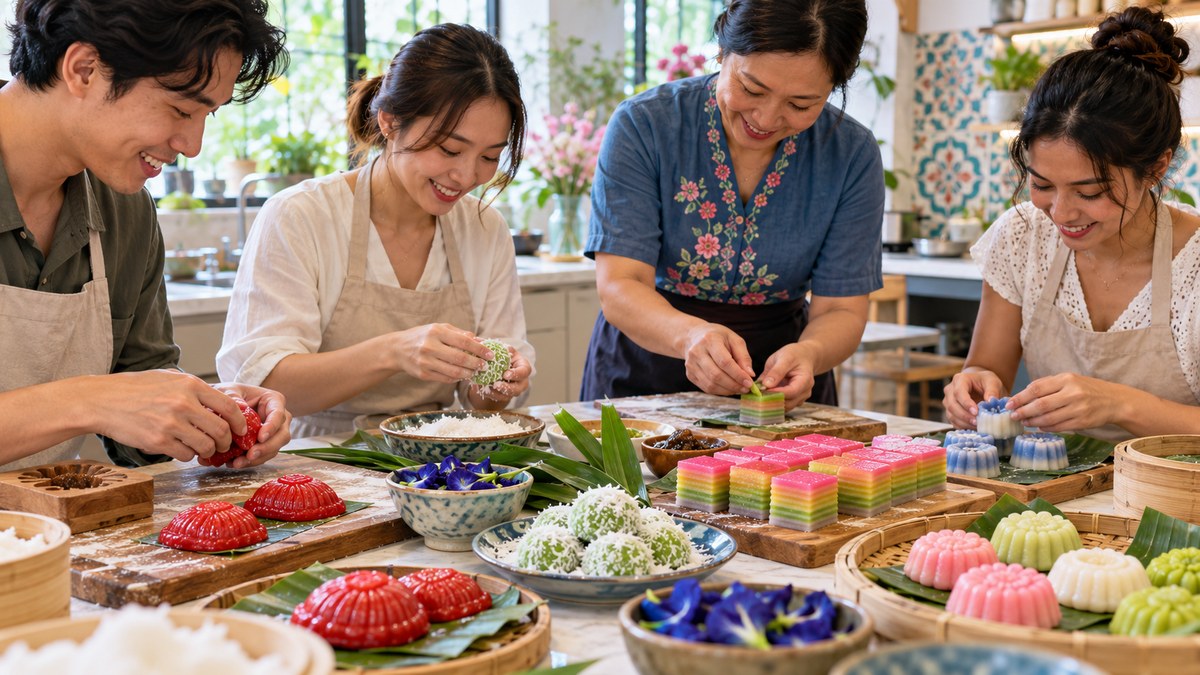
The first time you bite into a warm ang ku kueh fresh from the mould, something clicks. You stop thinking of it as just a snack. It becomes a story, a craft, a connection to generations of Peranakan grandmothers who measured ingredients by feel, not scales. For anyone living in Singapore, 2026 is the year to stop admiring these colourful sweets from behind a glass display and finally learn to make them yourself. A Nyonya kueh making class in Singapore is not just a cooking lesson. It is a passport into the heart of Peranakan culture, and right now, there has never been a better time to sign up.
Nyonya kueh making classes in Singapore have surged in popularity for 2026, with new workshops popping up in Katong, Joo Chiat, and Chinatown. These hands-on sessions teach you to make classics like kueh dadar and pulut inti using traditional techniques. You will leave with skills, recipes, and a deeper appreciation for Peranakan heritage. Perfect for foodies, expats, and gift seekers looking for an authentic Singapore experience.
Why 2026 Is the Sweet Spot for Peranakan Baking Classes
Singapore has always loved its kueh. You see them stacked in rows at hawker centres, wrapped in banana leaves at festive open houses, and sold in chic boxes at airport gift shops. But the demand for actual hands-on learning has exploded this year. A growing number of heritage centres, home-based bakers, and lifestyle studios now offer structured workshops where you can get your hands sticky with pandan juice and grated coconut.
What changed? For one, more people are looking for meaningful weekend activities that go beyond brunch and shopping. A Nyonya kueh making class in Singapore fits that gap perfectly. It is social, educational, and deeply satisfying. You walk in curious, you walk out with a box of handmade treats and a new skill. Plus, the resurgence of Peranakan culture in media and fashion has sparked curiosity among younger Singaporeans and expats alike. Everyone wants to know the stories behind those vivid blue pea flower colours and the sweet savoury balance of gula melaka.
What You Will Actually Learn in a Kueh Workshop
Most classes focus on three or four iconic kueh. You will not just watch a demo. You will mix, steam, and mould everything yourself. Here is a typical session flow:
- Introduction to ingredients. You will handle pandan leaves, screwpine leaves, glutinous rice flour, and fresh coconut milk. The instructor explains the role of each ingredient and how substitutions change the texture.
- Making the dough and fillings. You learn to grate coconut, cook gula melaka into a syrup, and knead coloured dough until it reaches the right elasticity. This is where you build muscle memory.
- Moulding and wrapping. Using wooden moulds carved with floral patterns, you press the dough into shape. For kueh dadar, you practise folding pandan crepes into neat parcels.
- Steaming and tasting. You steam your creations in traditional bamboo or metal steamers. Then you taste them warm, discussing texture, sweetness, and how to adjust at home.
By the end, you understand why a good kueh dadar should be soft but not mushy, and why ang ku kueh needs a specific ratio of potato starch to rice flour.
Common Mistakes First-Timers Make (And How to Avoid Them)
Even experienced home cooks slip up when they first try Nyonya kueh. The techniques are subtle. Here is a table that breaks down the most frequent errors and the simple fixes instructors teach in class.
| Mistake | Why It Happens | How to Fix It |
|---|---|---|
| Dough cracks when moulding | The dough is too dry or has been overworked | Add a teaspoon of coconut milk and rest the dough for 10 minutes |
| Kueh dadar crepes tear easily | The batter is too thin or the pan is too hot | Adjust batter to a thick cream consistency and lower the heat |
| Ang ku kueh loses its shape after steaming | The mould was overfilled or the dough lacked binding | Fill mould only 80% full and use the correct ratio of wheat starch |
| Gula melaka filling leaks out | The filling was too liquid or the parcel was not sealed properly | Cook the filling into a thick paste and pinch edges firmly |
| Colour fades after cooking | Natural dyes like blue pea flower are heat sensitive | Steam for a shorter time or add a pinch of lime juice to stabilise colour |
These are the exact corrections that turn a frustrating first attempt into a success. That is the value of a good teacher.
Where to Find the Best Nyonya Kueh Making Class Singapore Has to Offer
You have options. The scene has grown well beyond one or two community centre events. Here are the main types of providers you will find in 2026:
- Heritage centre workshops. Places like the Chinatown Heritage Centre and the Peranakan Museum run regular bilingual sessions. These are beginner friendly and often include a short tour of the exhibits. Great for tourists or new expats.
- Home-based bakers. Many Peranakan families now open their homes for small group classes. These feel intimate and personal. You learn family recipes passed down for generations. Check platforms like Airbnb Experiences or local Facebook groups.
- Lifestyle studios. Studios in Katong and Joo Chiat offer themed classes that combine kueh making with tea pairing or storytelling. Perfect for a birthday party or a team bonding activity.
- Community clubs. Some CCs (community centres) offer subsidised workshops during festive seasons like Chinese New Year or Hari Raya. These are budget friendly and often fill up fast.
For a deeper look at the food culture behind these treats, read our guide to discovering the top hidden food gems in Singapore you must try. It pairs well with a kueh making afternoon.
How to Choose the Right Class for Your Needs
Not all classes are the same. Some focus on savoury kueh, others on sweet. Some last 90 minutes, others stretch into a full afternoon. Here is a checklist to help you decide:
- Skill level. Look for classes marked “beginner” or “no experience needed”. Advanced classes assume you already know basic steaming techniques.
- Dietary restrictions. Ask ahead if they offer gluten free or vegan adaptations. Many traditional recipes use rice flour and coconut milk, so they are naturally gluten free.
- Group size. Small classes (6 to 8 people) give you more hands-on time. Larger groups mean more watching and less doing.
- Takeaway. Some classes let you bring home everything you make. Others only offer tasting portions. Check before booking.
- Language. If you are an expat who does not speak Mandarin or Malay, confirm the class is conducted in English. Most heritage centre workshops are bilingual, but home based classes may vary.
“The best students are the ones who ask questions. I love it when someone asks why we use banana leaves instead of parchment paper. That is how you truly learn the craft.”
* Mrs. Lim, a third generation Peranakan baker who has been teaching kueh classes in Katong since 2018.
What to Bring and What to Wear
You do not need any special equipment. The studio provides everything from aprons to moulds. But a few small preparations will make the experience smoother:
- Wear clothes you do not mind getting flour on. Pandan juice stains.
- Tie back long hair. You will be working near steamers and open flames.
- Bring a container. If the class allows takeaway, you will want a box to carry your kueh home. Some studios provide them, but not all.
- Bring your phone. You will want photos of the process and the final spread.
If you are planning a full foodie weekend, check out our guide on how to plan the perfect foodie weekend in Singapore for ideas on pairing your class with a hawker crawl or a Peranakan restaurant dinner.
The Deeper Reward: Keeping a Tradition Alive
Making Nyonya kueh is not just about following a recipe. It is about understanding a culture that blends Chinese, Malay, and Indonesian influences into something uniquely Singaporean. The techniques are old. The tools are simple. Yet the results are stunningly beautiful. Every time you press a mould or fold a crepe, you are continuing a practice that has been passed down through families for over a century.
For expats, this is a rare chance to connect with local heritage in a tactile, memorable way. You are not just observing culture from the outside. You are participating in it. And for Singaporeans who grew up eating these kueh but never learned to make them, these classes are a way to reclaim a skill that many feel they have lost.
A Final Slice of Practical Advice
Book your Nyonya kueh making class in Singapore at least two weeks in advance. Weekend slots, especially Saturday mornings, sell out quickly. If you are looking for a unique gift, consider buying a voucher for a class instead of another generic hamper. It is a present that gives someone an experience, a skill, and a box of edible memories. And if you go with friends, you will spend a couple of hours laughing over sticky dough and burnt coconut. That alone is worth the price of admission.