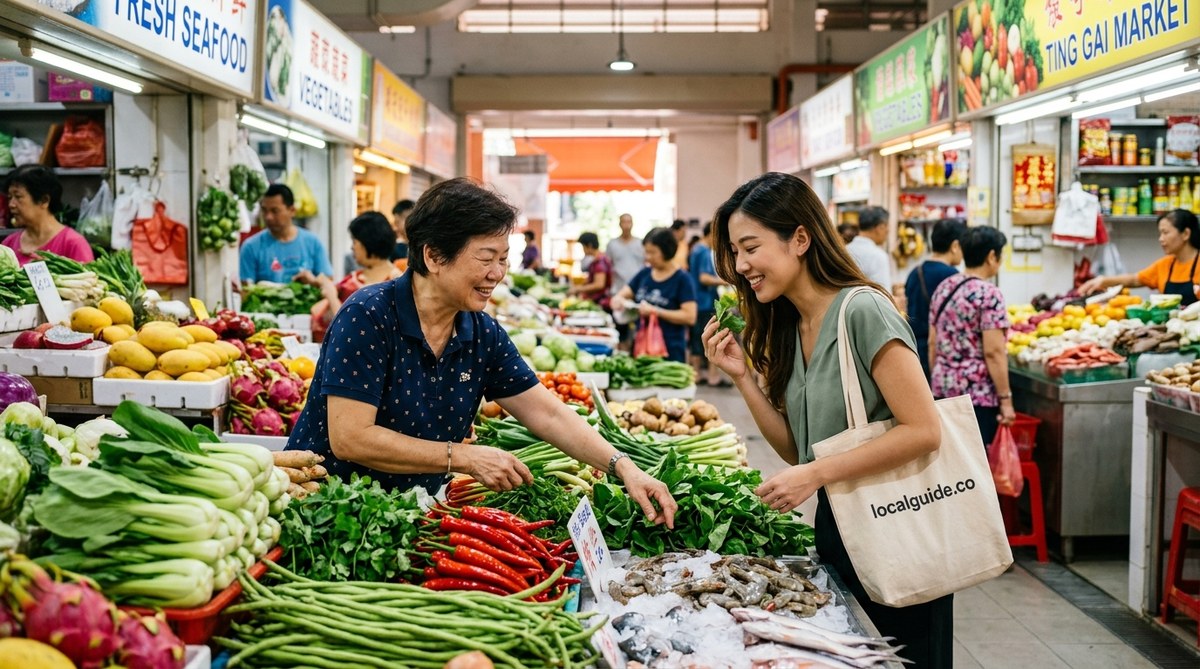
A wet market Singapore experience connects you with the island’s soul through fresh produce, hawker heritage, and neighbourly banter. From Tekka’s spice stalls to Tiong Bahru’s morning bustle, you will find tips on what to bring, how to ask, and which stall to trust. Skip the supermarket aisle once and discover why locals still swear by this daily ritual in 2026.
The hum of Cantonese and Hokkien fills the air. A fishmonger slaps a freshly sliced grouper onto the scale, while a vegetable auntie calls out to a regular customer by name. Someone behind you is bargaining over a bunch of kangkong. This is the wet market Singapore experience, and it is nothing like the sterile fluorescent hum of a supermarket.
Stepping into a wet market is like stepping into a living time capsule. It is loud, colourful, and unapologetically real. For anyone who calls themselves a foodie, missing this is like skipping the wok hei at a zi char stall. You can spend years eating at fancy restaurants, but the heart of Singaporean cooking still beats on these damp, fragrant, noisy floors. In 2026, more young people and expats are rediscovering wet markets, not just for groceries but for the whole experience.
A wet market visit in Singapore is a sensory education in local food culture, offering fresher produce, lower prices, and genuine community connections. This guide covers what to expect, how to shop like a local, and which markets to visit for the most rewarding wet market Singapore experience in 2026.
Why the Wet Market Still Matters in 2026
The alarm rings at 6.30am. On a Saturday. Most people would roll over and go back to sleep. But you are not most people. You are a foodie, and somewhere in Singapore, a fishmonger is already arranging parrotfish on crushed ice while a coffee stall uncle is pulling the first cup of kopi of the day. This is the wet market Singapore experience, and it is waiting for you.
Wet markets are not just places to buy groceries. They are living museums of flavour, community, and heritage. They are where the city’s heartbeat is loudest, where the freshest produce has never seen the inside of a chiller truck, and where every stallholder has a story to tell. If you have ever only done your shopping in an air conditioned supermarket, you are missing out on one of the most authentic experiences Singapore has to offer.
In 2026, as we rediscover the joy of slow living and real food, the wet market is having a moment. This guide will walk you through everything you need to know: why you should go, how to navigate the crowds like a pro, what to buy, and the common mistakes to avoid. By the end, you will be ready to plan your own hawker centre adventure, and you will understand why every Singapore foodie should visit a wet market at least once.
A wet market Singapore experience is about more than shopping. It is about tasting heritage, building community ties, and supporting local hawkers. Start small, bring cash, and talk to the uncles and aunties. You will leave with fresher food and a warmer heart.
Why the Wet Market Still Matters in 2026
The wet market is not a relic of the past. It is a vital part of Singapore’s food ecosystem. While supermarkets offer convenience, they cannot replicate the sensory richness of a market floor. The slap of fish on ice, the sharp aroma of fresh coriander, the low hum of bargaining in Hokkien and Malay. This is where the city’s culinary soul lives.
Markets also support a circular economy. When you buy from a wet market stall, you are directly supporting a family business. You are also reducing food waste, because you can buy exactly the amount you need. No more throwing away half a head of cabbage that has been sitting in your fridge for a week.
Moreover, wet markets are more resilient than you might think. During supply chain disruptions, they were often the first to adapt, sourcing directly from farms and fishermen. They are flexible, personal, and deeply rooted in the community. In a world that is increasingly digital and distant, the wet market is a grounding force.
A Living Heritage You Can Taste
Singapore’s wet markets are a unique blend of cultures. You will find Chinese vegetable sellers next to Malay spice stalls and Indian fishmongers. This diversity is not just a talking point; it is a reflection of the country’s multicultural identity. The term “pasar” (Malay for market) is used interchangeably with “wet market,” and you will often hear locals say “go pasar” when they head out to shop.
This heritage is worth preserving. Organisations like the National Heritage Board have even recognised the value of these spaces, documenting their history and the stories of the people who run them. When you visit, you are not just shopping; you are participating in a living tradition.
Expert advice: “Don’t be afraid to ask the stallholders for recommendations. They are the true food experts. If they tell you the fish is good that day, trust them. They have been doing this for decades, and their reputation depends on your satisfaction.” — A third-generation market vendor at Tekka.
How to Navigate the Wet Market Like a Pro
Walking into a wet market for the first time can be overwhelming. The crowds, the noise, the sheer volume of produce. But with a little preparation, you will be navigating those aisles like a seasoned auntie in no time.
Here is a numbered list of practical steps to get you started:
- Start with a plan. Know which section you need first. Most markets have a wet section (fish, meat, seafood) and a dry section (vegetables, fruits, spices, and household goods). Go for the wet section first while the selection is at its best.
- Go early. The best produce is gone by 9:00 AM. If you want the pick of the litter, arrive when the market opens, usually around 6:00 AM. You will also beat the worst of the crowds and the heat.
- Bring cash in small denominations. Many stallholders are elderly and may not accept digital payments. Small notes (S$2, S$5, S$10) will make transactions smoother and show respect for their business.
- Bring your own bags. While many markets now charge for plastic bags, bringing your own reusable ones is better for the environment and more convenient for you to carry your haul.
- Take a slow lap first. Before you buy anything, walk the entire market. This will give you a sense of the prices and quality available, so you do not get ripped off.
A Bulleted List of Essential Market Etiquette
- Don’t squeeze the produce. It bruises the goods. If you want a closer look, pick it up gently.
- Greet the stallholders. A simple “uncle” or “auntie” goes a long way. It is a sign of respect and opens the door for better service and sometimes even a discount.
- Ask before you touch. Especially at the fish and meat stalls, where items are often displayed on ice. It is better to ask the vendor to pick out a piece for you.
- Be patient. The markets are busy, and the aunties in front of you might be buying for a whole family. Take a deep breath and enjoy the atmosphere.
What to Buy at a Wet Market: A Foodie’s Guide
The wet market is a treasure trove of fresh ingredients. Here is a breakdown of what you should look for, depending on what you are cooking.
| Category | What to Look For | Common Mistakes to Avoid |
|---|---|---|
| Seafood | Bright, clear eyes; shiny skin; a fresh, briny smell (not fishy). | Buying fish that is past its prime. If the flesh springs back when you press it, it is fresh. |
| Meat & Poultry | Deep red colour; firm texture; no slimy film. | Buying more than you need. Meat is often sold in large portions, so ask for a smaller cut. |
| Vegetables | Crisp leaves; vibrant colour; no wilting. | Buying pre-washed or pre-cut vegetables. They lose nutrients and flavour. |
| Fruits | A fragrant smell; a slight give when gently pressed. | Buying fruit that is too hard. It may never ripen properly. |
| Spices & Herbs | Whole spices (they last longer); fresh, aromatic herbs. | Buying in bulk if you have a small kitchen. They will lose their potency. |
The Dry Section: More Than Just Dried Goods
Do not skip the dry section of the market. This is where you will find the pantry staples that form the backbone of Singaporean cuisine. Think belacan (dried shrimp paste), dried anchovies, and a vast array of noodles and rice. These items have a long shelf life and are often cheaper here than in supermarkets.
You can also find household items like bamboo steamers, claypots, and even traditional snacks. It is a great place to pick up a gift for the foodie in your life.
Common Mistakes to Avoid (and How to Fix Them)
Even the most experienced shoppers make mistakes. Here is a table to help you avoid the most common pitfalls.
| Mistake | The Consequence | The Solution |
|---|---|---|
| Going too late in the day | The best produce is gone, and the market is more crowded. | Go early. Set your alarm. The early bird catches the freshest fish. |
| Not bringing enough cash | You might miss out on a great deal if the stall doesn’t accept cards. | Withdraw cash before you go. Many stalls have a minimum spend for card payments. |
| Being afraid to bargain | You might overpay for your goods. | Bargaining is part of the culture, but do it respectfully. Never lowball; offer a fair price. |
| Buying the first thing you see | You might miss a better deal or fresher produce further down the aisle. | Take a lap around the whole market first. Compare prices and quality. |
| Ignoring the non-food stalls | You miss out on the full experience. | Take your time to explore. You never know what you might find. |
How to Plan Your First Market Visit
Ready to dive in? Here is a quick checklist to help you plan your first visit.
- Choose a market. Some of the most famous ones are Tekka Market (Little India), Tiong Bahru Market, and the Old Airport Road Food Centre. Each has its own unique character.
- Go on a weekday. If you can, avoid the weekend rush. You will have more space to browse and chat with the vendors.
- Come hungry. Many wet markets are attached to hawker centres, so you can reward yourself with a delicious breakfast or lunch after your shopping. Try the kaya toast and kopi for the full experience.
- Be prepared to learn. You will not get everything right on your first visit. That is okay. The joy is in the journey and the people you meet along the way.
Frequently Asked Questions (FAQ)
Q: Are wet markets more expensive than supermarkets?
A: It depends on the item. For fresh produce and seafood, they are often cheaper and of better quality. For packaged goods, supermarkets might be cheaper.
Q: Do the stallholders speak English?
A: Most do, at least a little. You will often hear a mix of English, Mandarin, Malay, and Tamil. Don’t be shy; a smile and a few words of Malay or Mandarin will be appreciated.
Q: Can I use a credit card?
A: It is best to bring cash. While many stalls now have digital payment options like PayLah! and PayNow, it is not universal. Cash is king at the wet market.
Q: Is it safe to eat the food from the hawker stalls at the market?
A: Yes. Singapore has some of the strictest food safety standards in the world. Look for stalls with a clean rating (A or B) and a long queue. A long queue is always a good sign.
Q: What is the best time to go?
A: Early morning, around 7:00 AM, is the sweet spot. The selection is at its best, and the market is less crowded.
Conclusion: Your Journey Starts Now
The wet market is more than just a place to shop. It is a feast for the senses, a hub of community, and a vital link to Singapore’s culinary heritage. In 2026, as we continue to value authenticity and connection, these markets are more important than ever. They offer a chance to slow down, to taste the seasons, and to support the people who feed us.
So, what are you waiting for? Grab your tote bag, put on some comfortable shoes, and head to your nearest wet market. Strike up a conversation with the vendor, ask what is fresh, and let your senses guide you. You will not just be buying dinner; you will be buying into a story that has been written over generations.
Your first wet market Singapore experience awaits. Go make it count.