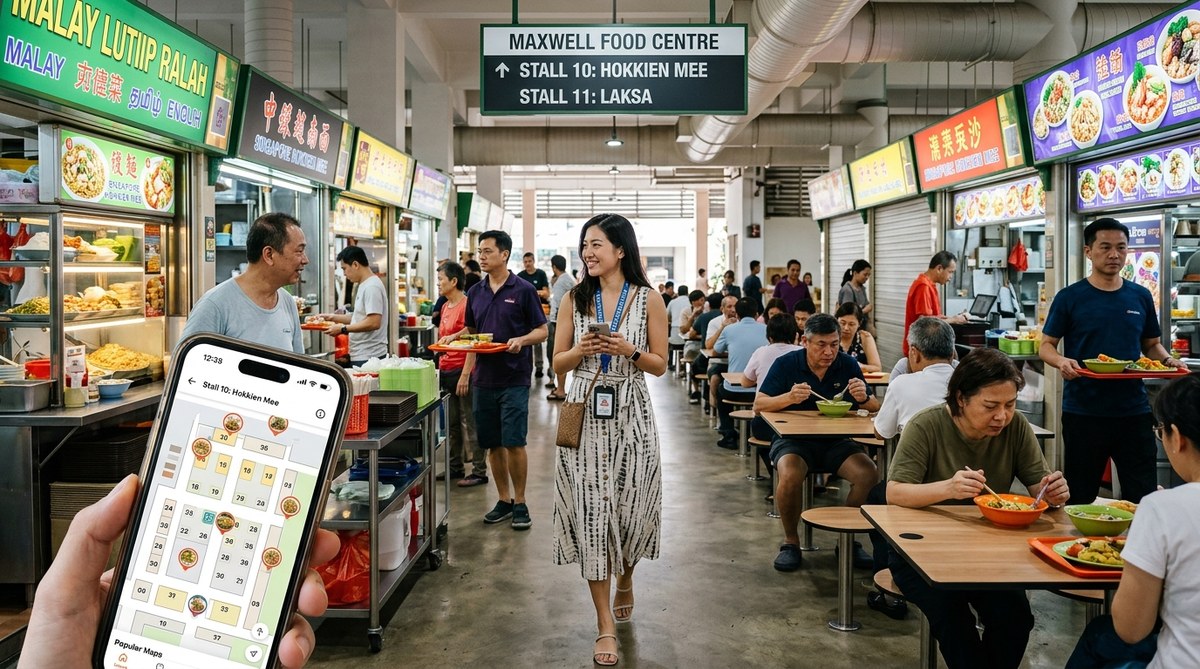
Hawker centres are the soul of Singapore’s food scene. These open air food courts serve up some of the best meals you will ever try, often for under SGD 5. For a first time visitor, the experience can feel a little chaotic. Long queues, unfamiliar dish names, and unspoken rules might make you hesitate. But with a few simple tips, you will be eating like a local in no time. Whether you want a plate of silky chicken rice or a bowl of spicy laksa, knowing how to eat at Singapore hawker centres is the key to an unforgettable food adventure.
Singapore’s hawker centres are the heart of local food culture, with affordable Michelin-recognised dishes in a casual, open-air setting. This guide covers ordering like a local, table choping, payment methods, and must-try dishes. From chicken rice to laksa, you will learn what to order. You will also learn when to visit and how to spot the best stalls. By the end, you will feel confident eating at any hawker centre in Singapore during your 2026 trip.
What Makes Hawker Centres Special
Hawker centres are not just places to eat. They are community hubs where people from all walks of life gather over steaming plates of food. Unlike restaurants, there is no service charge and no reservation system. You order at individual stalls, pay on the spot, and find your own seat. This casual setup is what makes hawker dining so charming and accessible.
Most hawker centres are open from early morning until late at night. Breakfast options like kaya toast and soft boiled eggs are available from 7 am. Lunch and dinner peak between 11:30 am and 1:30 pm, and again from 6 pm to 8 pm. If you want to avoid the crowd, visit at off peak hours like 3 pm or 9 pm.
Step by Step: How to Eat at a Hawker Centre
Here is the exact process that locals follow. It looks complicated at first, but you will pick it up after one visit.
-
Find a seat before you order. This is crucial. Hawker centres get busy, and tables fill up fast. Look for an empty table. If you see a table with a packet of tissues or a small umbrella on it, that means someone has already “choped” it. That is local speak for reserving a seat. Do not remove those items. Find another table or wait for one to open up.
-
Walk around the stalls first. Do not rush to join the first queue you see. Walk through the entire hawker centre to see what is available. Look at what other people are eating. Check the photos on the stall signs. This helps you decide what you want before you commit.
-
Join the queue and order. Once you know which stall you want, get in line. When it is your turn, tell the stallholder what you want. Be clear and direct. Most stallholders speak English, but pointing at the menu works too. Some stalls use a numbered ticketing system. Take your number and wait for it to be called.
-
Pay when you order. Most stalls expect payment when you place your order. Cash is still widely accepted, but more stalls now accept PayNow, GrabPay, or Nets. Some even take credit cards. Always have some small notes and coins handy just in case.
-
Collect your food. Depending on the stall, you might get your food immediately or wait a few minutes. Listen for your number or your name. Some stalls give you a buzzer that lights up when your order is ready.
-
Drinks are ordered separately. Do not expect the food stall to serve you a drink. There are usually dedicated drink stalls in every hawker centre. Look for a stall selling kopi, teh, or sugarcane juice. Order your drink there, pay, and take it back to your table.
-
Clean up after yourself. When you are done, take your tray to the designated return point. This keeps the hawker centre clean and helps the next person find a table faster.
Essential Tips for First Timers
These practical pointers will make your first hawker experience smooth and enjoyable.
- Bring a packet of tissues. Locals use tissue packets to chope tables. It is also handy for wiping your hands or face in the humidity.
- Wear comfortable shoes. You will be walking between stalls, standing in queues, and carrying trays. Flip flops are fine, but be careful of wet floors.
- Go with an empty stomach. Portions are generous, and you will want to try more than one dish. Share with a friend if you can.
- Do not be afraid of long queues. A long queue usually means the food is good. Join the line and see why everyone is waiting.
- Ask for recommendations. If you are unsure what to order, ask the stallholder what they are known for. Most will happily point you to their signature dish.
- Keep your belongings close. Hawker centres are generally safe, but it is always wise to keep your phone and wallet secure.
Common Mistakes and How to Avoid Them
| Mistake | What Happens | The Local Way |
|---|---|---|
| Ordering before finding a seat | You end up holding a hot tray with nowhere to sit | Chope a table first, then order |
| Paying after eating | The stallholder may not remember you | Pay when you order |
| Taking someone’s choped table | You get stares from locals | Look for tissue packets or personal items before sitting |
| Leaving your tray on the table | Staff have to clear it for you | Return your tray to the designated rack |
| Ordering at the drink stall first | You have to carry drinks while queuing for food | Order food first, then get drinks |
| Visiting at peak lunch hour | Long queues and no tables | Go at 11 am or 2 pm for a relaxed meal |
Expert Advice: Ordering with Confidence
“The best advice I give to first time visitors is this: watch the aunties and uncles. See what they order. See how they queue. Locals have a rhythm. They know which stalls are good because they have been eating there for years. If you see an elderly uncle eating a bowl of fishball noodles with a serious face, go ask him what stall it is from. He will be happy to tell you. Also, never be shy to ask for less sugar or less chilli. Stallholders are used to customising orders.”
A fourth generation Singaporean food lover who visits hawker centres at least three times a week
This advice is gold. Hawker centres are social spaces. Locals are generally friendly and happy to share their favourites. Strike up a conversation while waiting for your food. You might discover a hidden gem that no blog has written about yet.
What to Try on Your First Visit
If you are wondering what dishes to order, start with the classics. Hainanese chicken rice is a safe bet. It is mild, flavourful, and loved by almost everyone. Laksa is a rich coconut curry noodle soup that packs a punch. Char kway teow is a stir fried noodle dish with dark soy sauce, prawns, and Chinese sausage. Roti prata is a crispy flatbread served with curry, perfect for breakfast or supper.
For those who want to try everything, visit a hawker centre with a group of friends and order multiple dishes to share. This way you get to taste a bit of everything in one meal.
If you want to explore beyond the famous dishes, check out our guide to hidden food gems in Singapore. You will find lesser known stalls that locals love. For a broader overview of what to eat, our guide to authentic local dishes in Singapore covers all the regional favourites.
Some hawker centres are better known for certain cuisines. Chinatown Complex Food Centre has excellent Chinese dishes. Tekka Centre in Little India is the place for South Indian food. Golden Mile Food Centre is famous for Thai food. Each centre has its own personality.
How to Spot a Great Stall
Not all stalls are created equal. Here are signs that a stall is worth your time.
The queue is long but moves fast. A good stall will have a steady line of customers. Locals know quality. If the queue is moving quickly, the stall is efficient and experienced.
The stallholder looks busy and focused. Watch how they work. Experienced stallholders move with purpose. They handle multiple orders without breaking a sweat.
The stall has a clean, organised workspace. Hygiene matters. A stall that keeps its cooking area tidy is likely to serve fresh food.
The stall has been around for years. Many hawker stalls have been operating for decades. If a stall has survived that long, it has a loyal customer base. That is a strong signal of quality.
The stall has a Bib Gourmand or Michelin Plate sticker. Singapore has more Michelin recognised hawker stalls than any other country. Look for the small sticker displayed at the stall. It is a reliable shortcut to a great meal.
Putting It All Together for Your 2026 Visit
By now you know the basics of how to eat at Singapore hawker centres. You understand the process, the etiquette, and the best dishes to try. The next step is to put this knowledge into action.
Pick one hawker centre for your first visit. Choose one near your hotel for convenience. Go during an off peak hour so you have time to wander and observe. Follow the steps outlined above. Chope a table first, walk the stalls, order, pay, collect your food, and enjoy.
Do not pressure yourself to get everything right on the first try. Locals have been doing this their whole lives. You are learning. Every visit will teach you something new. After two or three meals, the whole process will feel natural.
Singapore’s hawker culture is recognised by UNESCO as an intangible cultural heritage. That is a big deal. It means the world agrees that this way of eating is special. You get to experience it firsthand.
If you want to keep learning, read our guide on where to eat in Singapore like a local. It covers specific hawker centres and the best stalls at each one. For those on a budget, our list of affordable Michelin starred meals in Singapore will help you eat well without spending much.
Your Hawker Journey Starts Now
The best way to learn is to do. Step into a hawker centre, take a deep breath, and soak in the energy. The sounds of woks sizzling, the aroma of chilli and garlic, the chatter of people sharing meals. This is Singapore at its most authentic.
You now have everything you need to eat with confidence. So go ahead. Chope your table. Join the queue. Point at something that looks good. Take a bite. Welcome to the world of hawker dining. You are going to love it.