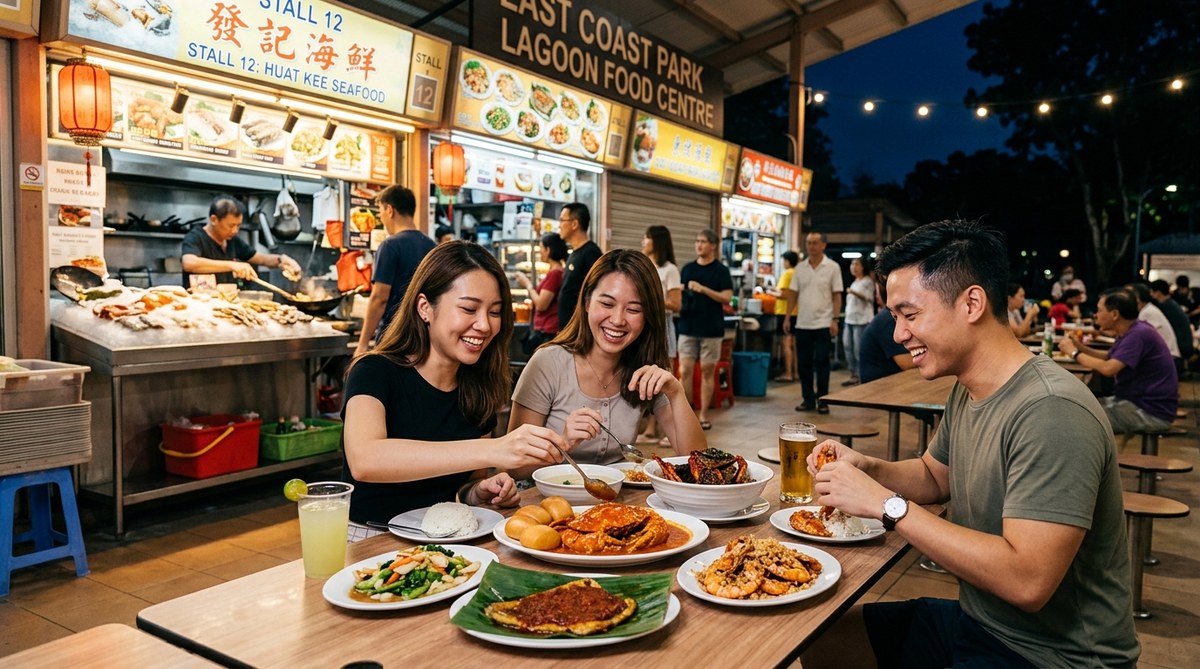
You are standing under the whirring ceiling fan of a busy hawker centre, the salt air from the sea mixing with the scent of burning charcoal and sambal. The East Coast Park stretch is famous for its seafood, but not every stall delivers the real deal. Some serve frozen prawns that taste of nothing. Others hide a small portion of crab beneath a mountain of sauce. This guide is here to change that. Whether you are a tourist fresh off the MRT or a local who has not visited in years, you will learn exactly how to spot the stalls that serve the freshest, most flavourful seafood along this iconic strip.
East Coast Park hawker centres serve some of Singapore’s best affordable seafood, from chilli crab to sambal stingray. To get the freshest plates, look for stalls with high turnover, arrive before 6pm, and watch for queues of local diners. Avoid tourist-heavy spots and focus on stalls that specialise in just one or two dishes. This guide breaks down how to identify quality, avoid common mistakes, and eat like a true local.
Why East Coast Park Hawker Centres Stand Out
East Coast Park is not just for cycling and picnics. The hawker centres here, especially those near the beach, have built a reputation for seafood that rivals some restaurant chains. The reason is simple: proximity to supply chains and a loyal customer base that demands freshness. Stalls at East Coast Lagoon Food Village and Marine Parade Hawker Centre have been operating for decades. They know their regulars by face. They cannot afford to serve anything less than top quality.
These centres also benefit from the park’s evening crowd. Families, joggers, and groups of friends end their day with a seafood feast. That constant flow means ingredients move fast. A stall that serves a hundred plates of sambal stingray on a Saturday night is not using frozen fish. It simply cannot keep up.
If you want to understand more about how Singaporeans choose their meals, check out this It will give you a broader sense of what locals prioritise when they eat out.
The Three-Step Method for Choosing a Winning Seafood Stall
You do not need to be a chef to pick the right stall. Follow these three steps and you will almost always leave satisfied.
-
Watch the crowd before you queue. Stand back for two minutes. Observe who is eating there. Are they families with young kids? Groups of older uncles sharing a jug of lime juice? If the table has locals who look like they have been coming here for years, you are in the right place. Avoid stalls where most customers are tourists holding selfie sticks. Those stalls rely on one-time visitors, not repeat business.
-
Check the display tank or ice bed. Many seafood stalls keep their raw ingredients on display. Look at the fish. Are the eyes clear and bright? Are the prawns still glossy and firm? If the stall has a live tank for crabs or lobsters, see if the animals are active. A crab that barely moves is not long for this world. A stall that hides its raw ingredients behind a counter may have something to hide.
-
Ask one simple question before ordering. Walk up to the stall and ask: “What is fresh today?” A good stall owner will tell you without hesitation. They might say the kuning fish just arrived this morning or the flower crab is especially meaty today. A hesitant answer, or a vague “everything is fresh”, is a red flag. Trust your gut and move to the next stall if the answer does not convince you.
These three steps take less than five minutes. They save you from a disappointing meal that costs more than it should.
Seafood Dishes You Must Order at East Coast Park
Not all seafood dishes travel well. Some are best enjoyed at a hawker centre where the wok hei is still crackling. These are the dishes that East Coast Park hawkers do best.
-
Sambal stingray (ikan pari bakar). The benchmark of any seafood hawker. The stingray should be thick, moist, and slathered in a sambal that has depth, not just heat. Look for charcoal-grilled versions. The smokiness is non-negotiable.
-
Chilli crab. The national dish of Singapore deserves your attention. A good version has a sauce that is thick, slightly sweet, and properly spicy. The crab should be heavy for its size, meaning the shell is full of meat. And get the deep-fried mantou buns. You will want every drop of that sauce.
-
Butter prawns. These come in two styles: the creamy, eggy version and the crispy, cereal-coated one. Both are excellent. Go for the latter if you want texture. The prawns should be large, deveined, and still snappy when you bite into them.
-
Fried baby squid (sotong). Often dusted with turmeric and fried until crispy. The best versions are tender inside, not rubbery. A squeeze of calamansi lime makes all the difference.
-
Fish head curry. This is a communal dish meant for sharing. The gravy should be tangy, spicy, and rich with coconut milk. The fish head should have plenty of cheek meat and the vegetables should still have some bite.
For a deeper look at where to find the best version of Singapore’s most famous crustacean dish, read this guide on
How to Tell If Seafood Is Fresh Before You Order
You can learn a lot just by looking and smelling. Use this table as a reference the next time you approach a seafood stall.
| Sign to Check | What Fresh Looks Like | What to Avoid |
|---|---|---|
| Smell around the stall | Clean ocean breeze, no strong odour | Sharp ammonia or overly fishy smell |
| Fish on ice or in tank | Bright, clear eyes; red gills; firm body | Cloudy eyes; dull gills; soft or slimy skin |
| Prawns | Shell is glossy and tightly attached; meat is translucent | Shell is loose or discoloured; black spots on head |
| Crabs and lobsters | Active movement in tank; heavy shell when lifted | Limp or no movement; shell feels light or hollow |
| Squid and cuttlefish | Firm flesh; skin still intact; natural colour | Soft, mushy texture; peeling skin; milky appearance |
Training your eye to spot these signs takes practice. After a few visits, you will start to notice which stalls consistently display quality ingredients.
Mistakes That Will Ruin Your Seafood Meal
Even the best ingredients can be ruined by poor choices. Here are the most common mistakes people make when ordering seafood at East Coast Park hawker centres.
A veteran hawker from Marine Parade once told me: “The biggest mistake customers make is ordering too many dishes with the same cooking style. If everything is fried in the same batter, you cannot taste the difference between the fish and the squid. You need variety: one grilled, one steamed, one stir-fried. That is how you respect the ingredient.”
This advice is gold. Many diners order three plates of deep-fried seafood and wonder why everything tastes the same. A balanced meal includes one grilled item (sambal stingray), one saucy dish (chilli crab or butter prawns), and something light like a steamed fish or a simple soup.
Another common mistake is ordering too early. Some stalls start cooking before the dinner rush. If you arrive at 4pm, your food might have been sitting under a heat lamp. Aim for 6pm to 7pm, when the dinner crowd is active and food is cooked to order.
Do not forget to check the price before you order. Seafood prices fluctuate with the season. A plate of chilli crab can cost anywhere from $28 to $58 depending on the crab size and market rate. Always ask for the price per kilogram and confirm the total before the dish is prepared.
For a broader understanding of how to avoid common pitfalls at any hawker centre, take a look at this
Timing Your Visit for the Freshest Catch
Timing matters more than you think. Seafood stalls at East Coast Park typically receive their deliveries in the late morning. The freshest ingredients are available from around 11am to 2pm for lunch, and again from 5pm onwards for dinner.
If you want the absolute best selection, arrive on a weekday evening around 5.30pm. The weekend crowd is larger and stalls run out of popular items faster. On a weekday, you have a better chance of getting the specific fish or crab you want.
Avoid public holidays if you can. The queues at East Coast Lagoon Food Village can stretch to 45 minutes on a public holiday evening. The quality also dips slightly because the stalls are rushing to serve the massive crowd.
Rainy evenings are actually a good time to visit. The crowd is smaller, the stalls are less rushed, and you often get more attentive service. Just bring an umbrella and prepare for a bit of drizzle.
Your East Coast Park Seafood Game Plan
Here is a simple plan you can follow on your next visit.
Start at East Coast Lagoon Food Village. Walk the entire row of seafood stalls once before deciding. Apply the three-step method: watch the crowd, check the display, ask what is fresh. Pick one stall for your main seafood dish and a second stall for sides like Hokkien mee or satay. This way you get the best of both worlds without committing everything to one stall.
Order one grilled dish, one saucy dish, and one vegetable dish to balance the meal. Share everything family-style. That is how Singaporeans eat. Do not forget the rice or mantou to soak up the sauces.
Stick to a budget by confirming prices upfront. If you are unsure, ask the stall owner directly. Most are happy to explain.
After your meal, take a short walk along the beach. The sea breeze will cool you down and the view of the Singapore skyline at night is a perfect end to the evening.
For more ideas on where to eat across Singapore, this https://localguide.co/where-to-eat-in-singapore-like-a-local-in-2026/ offers plenty of recommendations that go beyond the usual tourist spots.
Eat Fresh, Eat Local, Eat Smart
The best seafood at East Coast Park is not found in the most decorated stall. It is found where the ingredients are respected, where the cook knows the flame, and where the queue is made up of people who live nearby. Use the method in this guide on your next visit. Watch, ask, choose. Then sit down with a cold drink and let the flavours do the talking. You came for the beach, but you will stay for the food.