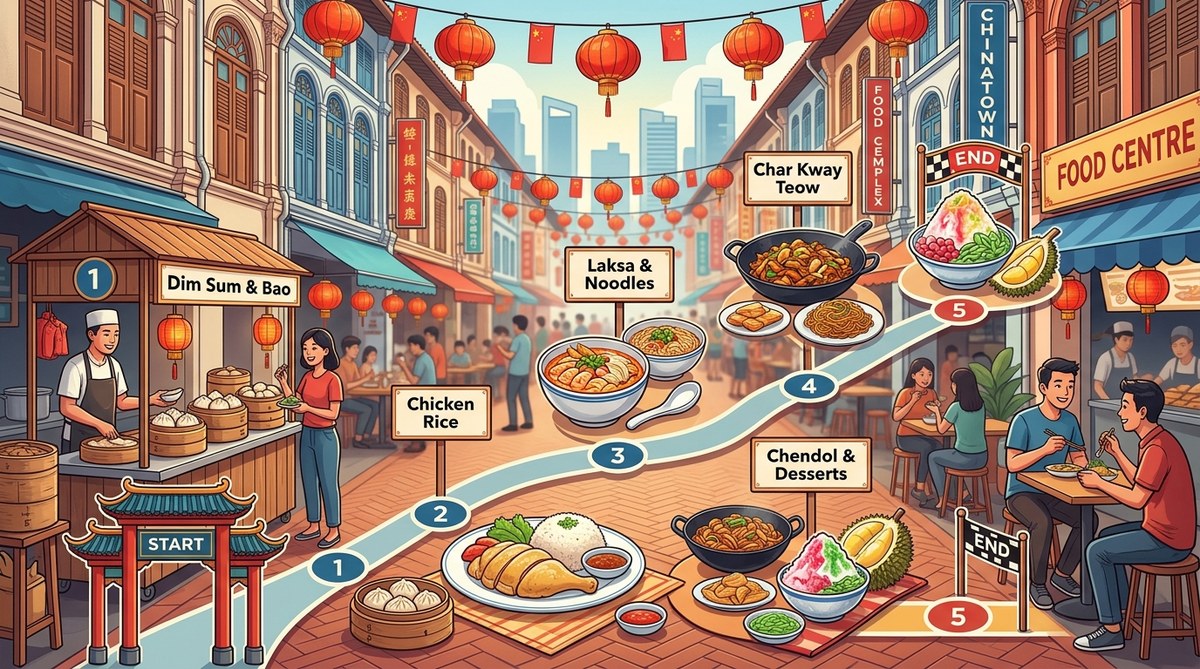
Walking through the gates of Chinatown, the air hits you with a mix of sizzling oil, steamed buns, and something sweet caramelising nearby. This is where you want to be hungry and prepared. A self-guided Chinatown food tour puts you in charge of every bite. You decide the pace, the budget, and the dishes. No waiting for a group. No fixed menu. Just the freedom to follow your nose.
A self-guided Chinatown food tour lets you eat at your own pace while sampling the neighbourhood’s best dishes. Plan five to seven stops, share portions with a friend, and arrive hungry. Focus on stalls with high turnover, order what looks fresh, and don’t skip the dessert cart. This guide walks you through every step from start to finish.
Why Build Your Own Chinatown Food Crawl
A guided tour has its place. But a self-guided route gives you flexibility that no group can match. You can skip a line that looks too long. You can double back for a second serving of that soup dumpling place. You can take a break when the Singapore heat or the NYC humidity gets too much.
For Singaporeans who grew up with hawker centres, wandering through Chinatown in another city feels familiar yet fresh. The same chaotic energy, the same clatter of woks, the same aunties shouting orders. But the flavours tell a different story. That is the magic of a DIY food tour. You get to compare, contrast, and collect memories at your own speed.
A well planned crawl turns a simple meal into a full afternoon of discovery. You learn how each community puts its own spin on classic dishes. The roast pork in one Chinatown might have a Cantonese lineage. In another, it carries hints of Fujian or Hokkien influence. Tasting these differences side by side is something no single restaurant visit can offer.
How to Plan Your Chinatown Food Tour in 5 Steps
Here is a simple process to build your crawl without getting overwhelmed.
-
Mark your map before you go. Pick a starting point and an ending point. Most Chinatowns have a natural flow from one end to the other. Look for clusters of popular stalls and restaurants along the main drag. Save each stop on your phone map so you do not waste time staring at your screen while standing in the middle of the street. Knowing the layout prevents you from walking back and forth across the same block three times.
-
Limit yourself to five to seven stops. Any more and you will be too full to enjoy the last few. Any fewer and you might miss the variety that makes Chinatown special. Aim for two savoury mains, two snacks or small plates, one soup or dumpling stop, and one dessert. This structure gives you a balanced meal without overloading your stomach.
-
Share everything with someone else. A proper food crawl works best with at least one other person. Order one or two items per stop and split them. This way you taste more without hitting a wall halfway through. If you are flying solo, ask for smaller portions or order just one dish at each place. Some stalls are happy to do half orders if you ask nicely.
-
Bring cash and a backup card. Many older stalls in Chinatown still operate on cash only. Keep small bills handy. Some places have a minimum spend for card payments. Having both options saves you from walking away hungry when you spot a stall with no card machine. A good rule is to carry at least $30 in small notes.
-
Pace yourself with drinks. Skip the heavy soda or bubble tea until the end. Order tea or plain water between stops. It cleanses your palate and leaves room for the next dish. A warm oolong or jasmine tea cuts through rich flavours better than any soft drink can.
What to Look for at Each Stall or Restaurant
Not every shop with a neon sign is worth your time. Here is what signals quality in Chinatown food spots.
-
Long lines of locals. Tourists follow guidebooks. Locals follow their stomachs. If you see a queue of people speaking the local language, join it. They know which stall has the freshest batch of dumplings or the crispiest roast duck.
-
Woks that never stop moving. A stall where the cook is constantly flipping, steaming, and plating is a good sign. It means the food is fresh and the demand is high. A quiet kitchen with no movement usually means the food has been sitting around.
-
Clean but not sterile. Street food spots do not need fancy decor. But the serving area should be tidy. If the floor is sticky and the plates are chipped, that is a red flag. A stall that cares about its food usually cares about its workspace too.
-
Written menu that looks old. Places that have been around for decades often have faded menu boards with peeling stickers. That is a good sign. New places with glossy laminated menus sometimes prioritise looks over taste. The worn down menu tells you the stall has survived because the food is good.
-
One clear specialty. The best Chinatown stalls do one thing well. A dumpling shop that only makes dumplings will almost always beat a place that tries to serve dumplings, noodles, rice, and curry. Specialisation means they have perfected that dish over years of practice.
Dishes You Should Not Miss on a Chinatown Food Tour
Certain dishes appear in almost every Chinatown around the world. Each version tells you something about the local community.
Soup dumplings (xiaolongbao) are a must at almost any Chinatown worth visiting. The skin should be thin enough to see the broth inside but sturdy enough to hold it. Bite carefully. The soup is scalding hot straight from the steamer.
Roast meats appear in nearly every Chinatown. Look for ducks and pork hanging in the window with caramelised skin. The best shops sell out by early afternoon. Go before 1pm for the best selection.
Hand pulled noodles are a performance as much as a meal. Watch the chef stretch and fold the dough if you can. The noodles should be chewy and uneven, a sign that they were made by hand rather than cut by a machine.
Egg tarts make the perfect finale. The pastry should be flaky and the custard centre should wobble slightly when you tap it. A good egg tart is warm, not hot, with a layer of glossy caramel on top.
Fried dough sticks (youtiao) are a classic snack. They are best eaten fresh and crisp, dipped into warm soy milk or congee. If you see a stall frying them on the spot, stop and order one.
Common Chinatown Food Tour Mistakes
| Mistake | Why It Hurts Your Tour | How to Avoid It |
|---|---|---|
| Ordering too much at the first stop | You fill up before seeing the best options | Order one item per person or share a single dish |
| Visiting at peak lunch hour | Lines are longest between 12pm and 2pm | Go at 11am or 3pm for shorter waits |
| Sticking only to the main street | The best food is often one block away | Walk into side streets and look for hidden stalls |
| Ignoring the dessert stall | You miss the sweet ending that rounds out the meal | Save 15% of your appetite for something sweet |
| Using only a credit card | Cash only stalls will turn you away | Carry at least $30 in small bills |
| Eating alone without sharing | You run out of stomach space too fast | Bring a friend or order half portions |
“The best advice I give to anyone doing a Chinatown food crawl is to treat it like a tasting menu, not a buffet. Take small bites, savour each one, and leave room for the unexpected. The stall with no English sign and a line of grandmas is always the one you will remember.”
– Mei Ling Tan, food blogger and former Chinatown tour guide in NYC
When to Visit for the Best Experience
Timing matters more than you think. Chinatown hits different rhythms throughout the day.
Morning (9am to 11am) is best for dim sum and fresh pastries. The crowds are thin and the steam is still rising. You can grab a seat without waiting. Stalls are putting out their first batches of the day, which means everything is freshly made.
Late afternoon (2pm to 4pm) is the sweet spot for noodles and dumplings. The lunch rush is over and the dinner crowd has not arrived. Stalls are restocking and the food is fresh. This is also when you will find the shortest lines at the most popular places.
Evening (6pm to 8pm) is lively but crowded. Great for atmosphere, but expect lines. Go with a group so someone can hold the table while others order. The energy is high and the streets are buzzing, but patience is required.
Avoid Mondays. Many Chinatown restaurants and stalls close on Mondays for rest. Tuesday through Thursday offer the best balance of availability and crowd levels. Weekends are busy but fun if you do not mind queues.
If you are planning a longer food trip, you might also enjoy this guide to top food experiences every Singapore visitor should try. It pairs well with your Chinatown crawl.
Making the Most of Your Chinatown Food Adventure
A self-guided Chinatown food tour is more than a meal. It is a way to read a neighbourhood through its flavours. Each stall tells a story about migration, adaptation, and tradition. The roasted duck hanging in the window, the bamboo baskets stacked by the door, the old uncle folding dumplings by hand. These details matter.
Take a moment between bites to look around. Chat with the stall owner if they are not busy. Ask what they recommend. Most are happy to share a tip or a story. That is how you find the dishes that never make it onto the tourist lists.
Bring a small notebook or use your phone notes to jot down the names of stalls you like. You will thank yourself later when you want to recommend them to friends or revisit on your next trip.
For Singaporeans, the experience often feels like a conversation between home and abroad. The flavours are familiar but different. The same ingredients take on new shapes. That contrast is what makes a Chinatown food tour in any city so rewarding.
Your Chinatown Food Tour Starts Now
You have the plan, the tips, and the timing. Now it is just about showing up hungry and curious. Grab a friend, bring cash, and let the smell of sesame oil and fried garlic guide you. Every Chinatown has a different personality. Your job is to taste it one dish at a time.
Start with a dumpling, end with a sweet pastry, and enjoy everything in between. That is what a good Chinatown food tour is all about. The best bites are the ones you find on your own terms.