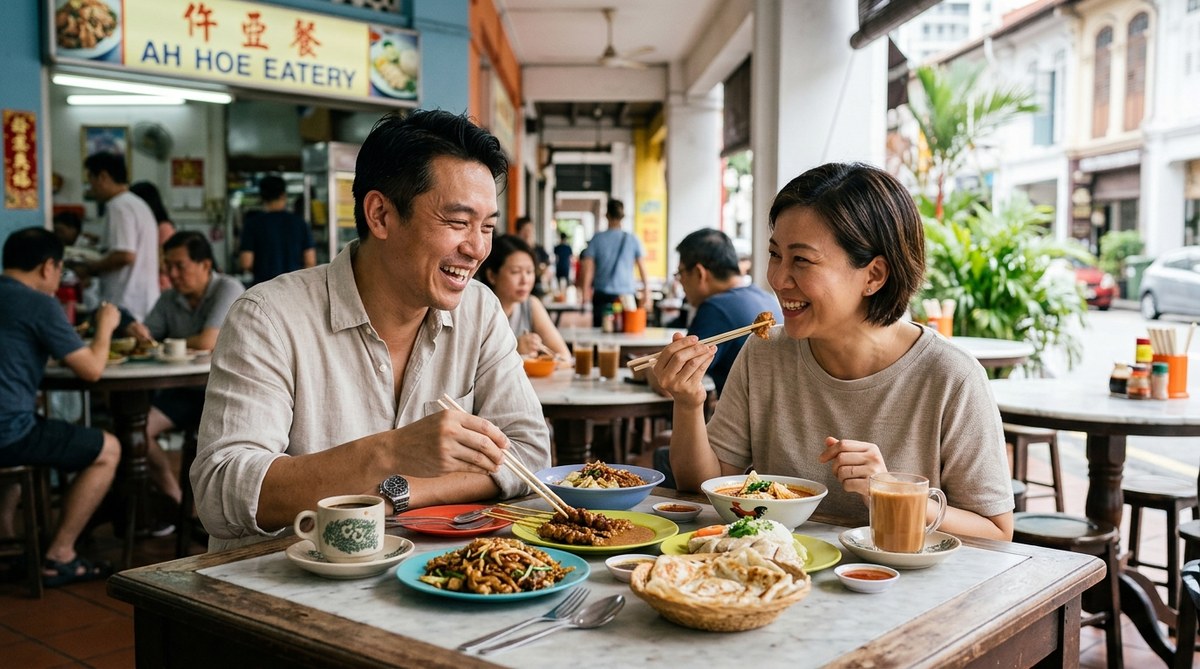
Discover the hidden hawker stalls and restaurants that Singapore’s top chefs visit on their days off. Insider recommendations for food lovers in 2026.
You spend hours crafting perfect dishes at your own restaurant. Your palate is trained to catch the faintest hint of spice or salt. So when you finally clock off, where do you go? For Singapore’s culinary stars, the answer is rarely a high-end restaurant. Instead, they head to humble hawker centres, unassuming kopitiams, and family-run stalls that serve the food they grew up with. We asked several top chefs to spill their favourite off-duty dining spots. This is where they go for a truly satisfying meal.
Singapore’s top chefs head to unpretentious hawker centres and family-run eateries on their days off, craving dishes like chilli crab, laksa, and kaya toast. They value authenticity over fancy interiors and queue patiently for their favourites. Use this guide to discover the best local food in Singapore in 2026 and eat like a true culinary insider. These are the spots they return to again and again.
The Humble Hawker: Where Chefs Find Their Comfort
When you spend every evening plating Michelin-starred creations, a no-frills bowl of bak chor mee feels like a reward. Chefs in Singapore often crave the flavours of their childhood – the smoky wok hei from a roadside stall, the intense broth of a decades-old beef noodle seller, or the perfect crackle of a roast pork belly. These aren’t places with valet parking or tasting menus. They are the heartbeat of Singaporean food culture.
One such spot is Red Star Restaurant in Chinatown. Marcus Leow, chef de cuisine of The Naked Finn, heads there for dim sum on his day off. “The siew mai and char siew sou taste exactly like what I ate as a kid,” he says. “No trendy twists. Just solid, honest cooking.” Another favourite is The Coconut Club on Beach Road. Chef Janice Wong of Janice Wong Singapore loves their nasi lemak – specifically the coconut rice, which she calls “fluffy, fragrant, and perfectly balanced with the sambal.”
Chefs are also big fans of Canton Delicacies in Tanjong Pagar. Executive chef Paul Hallett of Sushisamba Singapore orders their roast duck and char siu. “The skin is glassy, the meat is tender,” he explains. “It’s the kind of takeaway you crave after a late shift.”
These choices aren’t random. They reflect a deep understanding of ingredients and technique. When a chef praises a hawker stall, it means the fundamentals are spot on: the fire, the seasoning, the texture.
Chefs Share Their Top 5 Off-Duty Meals
We compiled a list of five dishes that Singapore’s top chefs return to again and again. Each one comes with a personal recommendation.
-
Hainanese Chicken Rice at Yet Con (Whampoa Drive) – Chef Hafizzul Hashim of Fiz swears by the silky poached chicken and fragrant rice. “They use old-school methods. The chicken is never dry, and the chilli is made fresh daily.”
-
Chilli Crab at Palm Beach Seafood (East Coast Park) – Petrina Loh, chef-owner of Morsels, says this is her go to when she wants to indulge. “The sauce has the right balance of sweet and spicy. You need to dip every piece of fried mantou into it.”
-
Beef Kway Teow at Hill Street Tai Hwa (Jalan Besar) – A Michelin Bib Gourmand stall that chef Fernanda Guerrero of Araya visits on weekends. “The wok hei is insane. It’s a simple dish, but they execute it perfectly every time.”
-
Carrot Cake (black or white) at Bedok 85 Feng Zhen Carrot Cake – Many chefs love the version from this stall, including chef Paul Hallett. “The black version with sweet sauce and lots of chai poh [preserved radish] is my weakness.”
-
Roti Prata at Mr Prata (Telok Kurau) – Chef Janice Wong recommends the crispy, flaky prata with fish curry. “It’s the ultimate late night snack. The dough is rested properly, so it’s light and airy inside.”
These spots are not secret, but they are authentic. Chefs don’t keep them hidden – they want everyone to experience the same joy.
Why Chefs Choose These Spots
The reasons are clear. Chefs value:
- Consistency – A stall that has been running for 30 years knows its recipe. No guesswork.
- Ingredient quality – Hawkers often source from the same suppliers for decades.
- Technique – Many hawkers have mastered a single dish. They do it better than anyone.
- Nostalgia – These tastes remind chefs of their families, their childhoods, and why they entered the kitchen in the first place.
- No pretence – You don’t need a reservation. You just show up and eat.
Common Mistakes When Trying Chef Recommendations
Even with a chef’s blessing, you can end up disappointed if you don’t follow a few rules. Here are the most common slip ups and how to avoid them.
| Mistake | Why It Happens | How to Fix It |
|---|---|---|
| Going at the wrong time | Chefs often visit right when the stall opens. You arrive at 1pm and the dish is sold out. | Check the stall’s social media or call. Many famous stalls close by 2pm or run out of key items. |
| Ordering the wrong dish | You see the long queue and assume every item is equally good. But the stall may be famous for only one or two dishes. | Ask the chef exactly what to order. For example, at Red Star, the siew mai is the star, not the egg tarts. |
| Expecting a quiet, relaxed meal | Hawker centres are loud, hot, and busy. If you want a serene dining experience, you’ll be offended. | Go with an open mind. Embrace the chaos. Bring a small fan and a sense of adventure. |
Expert Advice: How to Spot a Great Hawker Stall
We asked chef-owner Petrina Loh for her tip on identifying a quality stall without trying it first.
“Look at the queue. But don’t just look at the length. Watch the regulars. Do they order the same thing every time? Do they have a relationship with the uncle behind the wok? A good stall has a loyal following, not just tourists. Also, note if the cooking area is tidy. A messy station usually means lazy habits. The best hawkers keep their workspace clean – that discipline shows in their food.”
Where to Start: A Step by Step Plan
If you want to eat like a chef on your next free day, follow this simple process.
- Pick one cuisine. Don’t try to cover everything. Decide if you want noodles, rice, or seafood.
- Research the stall’s peak hours. Most top stalls open around 6am or 7am and close by 3pm. Others only do dinner. Go early.
- Order the signature dish. Seldom explore. Start with what made the stall famous.
- Talk to the hawker. If they’re not too busy, ask what they recommend. The answer might surprise you.
- Pair it wisely. A cold kopi o kosong or a sugarcane juice can cut through rich flavours. Don’t order a milkshake with spicy laksa.
- Take notes. You’ll want to remember exactly what you ordered for next time.
For more inspiration, our guide on where to eat in Singapore like a local in 2026 covers other hidden spots that locals love.
The Unwritten Rules of Eating Like a Chef
Chefs don’t just order food – they respect the process. When they queue for 45 minutes at a hawker centre, they don’t complain. They use that time to observe. They watch how the hawker handles the wok, how they season the broth, how they plate. If you want to eat like a pro, adopt the same mindset.
- Never rush a hawker. They are artists working under pressure.
- If the stall has a specific order system (tissue paper on table, trays, etc.), follow it.
- Bring cash. Many stalls don’t accept cards or PayNow.
- Stay hydrated. The heat can hit you hard, especially if you’re used to air-conditioned restaurants.
For a deeper look at Singapore’s hawker culture, check out our piece on how to navigate Singapore’s hawker centres like a pro in 2026.
Where Will Your Next Chef Approved Meal Be?
The next time you’re planning a food outing, skip the trendy cafe and try a stall that a top chef loves. You might end up queuing next to a Michelin star chef without even realising it. That’s the beauty of Singapore’s food scene – everyone, from celebrity chefs to office workers, can share a common love for a perfect bowl of noodles.
So grab your friends, head to a hawker centre, and order what the pros order. You’ll taste the difference. And you’ll understand why these chefs spend their precious off day eating from plastic plates under a noisy ceiling fan.
For more recommendations, browse our top hidden food gems in Singapore that even locals have yet to discover.