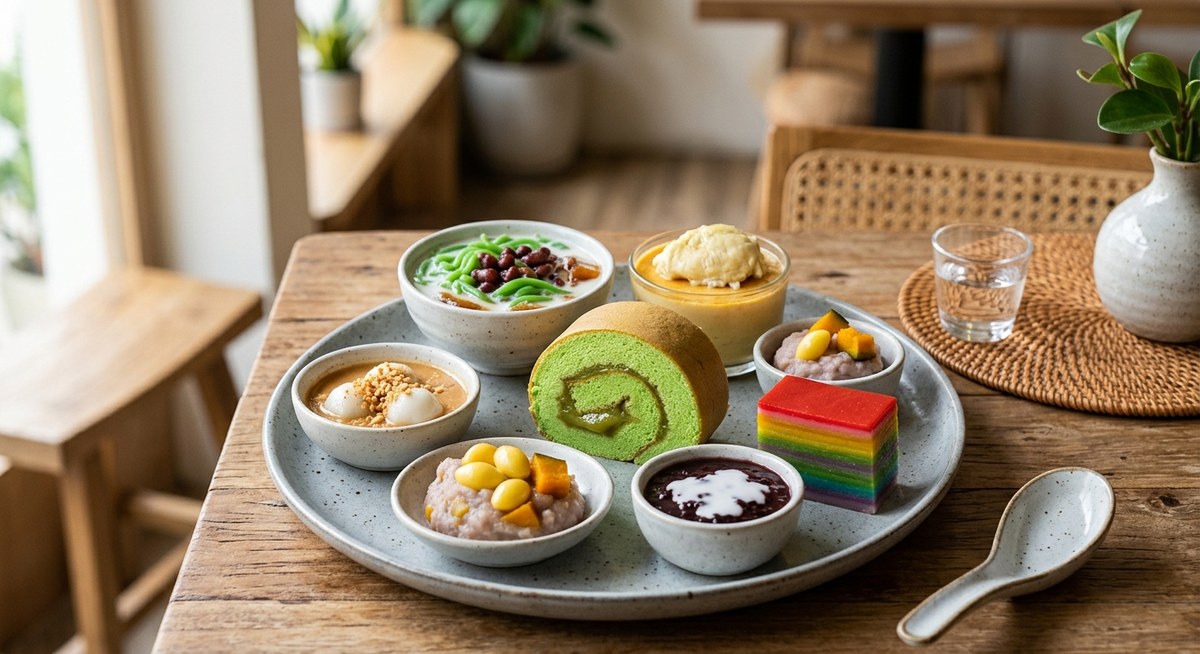
You land at Changi Airport, the humidity hits you, and the first thing that comes to mind is food. Not just any food, but the sweet stuff. Singapore is a dessert paradise, but not in the way you think. Skip the generic chocolate cakes and tiramisu you can find anywhere. This island has a lineup of sweets that you simply cannot get anywhere else. They use ingredients you might not have tried. They mix Chinese, Malay, Indian, and Peranakan traditions into bowls of pure joy. These are the desserts that Singaporeans grow up eating, the ones we argue about over supper, and the ones that will make you miss this city the moment you leave.
Singapore’s dessert culture is a treasure of cross-cultural flavours. From icy bowls of chendol to warm bowls of pulut hitam, these seven sweets are unique to the region. They use pandan, gula melaka, coconut milk, and durian in ways you won’t find elsewhere. Each dessert tells a story of home. This guide helps you locate the best stalls and avoid tourist traps, so you can eat like a true local on your next trip.
Why Singapore’s dessert scene is one of a kind
Singapore sits at the crossroads of culinary traditions. The result is a dessert repertoire that borrows from Nonya kueh, Hainanese coffee shops, Indian rojak stalls, and Malay hawker carts. Many of these sweets rely on ingredients that are rare or expensive outside Southeast Asia. Pandan leaves, gula melaka (palm sugar), and coconut cream form the backbone. You will also find tropical fruits like durian and jackfruit used in unexpected ways.
What makes these desserts exclusive is that they rarely travel well. Chendol melts. Ice kachang collapses. Pulut hitam needs to be eaten warm. So if you want the real deal, you have to come here. The year 2026 is a great time to visit because several old school stalls are still run by third generation hawkers, and new cafes are putting modern twists on old classics.
A local sweet tooth tradition
Eating dessert in Singapore is not an afterthought. It is a proper meal occasion. After a heavy plate of chicken rice or laksa, locals head straight for a bowl of tau suan or a slice of sugee cake. Many hawker centres stay open late specifically for the dessert crowd. You will see groups of friends sharing a huge bowl of ice kachang at 11 pm, sweating in the open air and laughing. That is the spirit.
7 must-try desserts Singapore locals swear by
We have picked seven sweets that are either invented here or so deeply rooted in the local food scene that they have become synonymous with Singapore. You will find them in hawker centres, old coffee shops, and a few modern dessert houses.
1. Chendol
Chendol is the king of Singaporean desserts. It looks like a green and brown mountain of shaved ice, drowned in coconut milk and gula melaka syrup. The green strands are made from rice flour and pandan juice, giving them a soft, jelly like bite. You will also find red beans and sweet corn at the bottom, which might sound strange but works beautifully.
Where to find it: Try the famous stall at Maxwell Food Centre or the one at Old Airport Road Food Centre. Ask for extra gula melaka if you have a sweet tooth.
2. Ice kachang
Ice kachang is the ultimate hot weather dessert. A mound of finely shaved ice is piled high and drenched in colourful syrups (rose, sarsi, and sometimes lychee). Underneath the ice you find a surprise: attap seeds, red beans, grass jelly, sweet corn, and a scoop of ice cream if you ask nicely. Every mouthful is different.
Where to find it: The classic version at Mei Heong Yuen Dessert in Chinatown is a crowd pleaser. For a modern twist, some cafes now use coconut milk instead of evaporated milk.
3. Pulut hitam
Pulut hitam is a warm, comforting bowl of black glutinous rice porridge cooked with pandan leaves and coconut milk. It is sweet, slightly nutty, and has a thick, creamy texture. Most hawkers serve it with a drizzle of coconut cream on top. It is the kind of dessert you eat on a rainy evening or after a spicy meal.
Where to find it: The stall at Bedok Interchange Hawker Centre does a stellar version. Many people argue over which stall is best, but this one has been around for decades.
4. Durian pengat
Durian pengat is a rich, custard like dessert made from durian flesh, coconut milk, and a little bit of salt to balance the sweetness. Unlike strong flavoured durian in the shell, pengat is smooth and mellow. It is often served warm with a side of glutinous rice or sago pearls. If you are new to durian, this is a gentle introduction.
Where to find it: Look for it at Malay food stalls during the durian season, usually from June to August. Some restaurants like 328 Katong Laksa offer it as a special.
5. Pandan chiffon cake
Pandan chiffon cake is light, fluffy, and naturally green from pandan juice. It is a staple in Singapore bakeries and often appears at birthday parties and festive gatherings. Unlike American chiffon cakes, the pandan version uses coconut milk, which gives it a moist, fragrant crumb. You can find it in slices or as a whole cake.
Where to find it: Bengawan Solo is the go to chain. Their pandan chiffon cake is sold in most shopping malls and even at Changi Airport for takeaway.
6. Orh nee (yam paste)
Orh nee is a Teochew dessert made from steamed and mashed yam, mixed with sugar, coconut milk, and a generous amount of oil (traditionally lard). The result is a dark purple paste that is sweet, savoury, and unbelievably smooth. It is usually served warm with gingko nuts. The lard gives it a silky mouthfeel that you cannot replicate with butter.
Where to find it: The best orh nee comes from traditional Teochew restaurants like Huat Kee Eating House or from the dessert stall at Golden Mile Food Centre.
7. Tau suan
Tau suan is a warm, soupy dessert made from split mung beans. The beans are cooked with sugar and pandan leaves until soft, then thickened with a cornstarch slurry. It is served with crispy you tiao (fried dough sticks) on the side. You dip the you tiao into the tau suan and enjoy the contrast between soft and crunchy.
Where to find it: Many old school dessert shops in Geylang and Toa Payoh sell tau suan. The version at Ah Chew Desserts is consistently good.
How to order these desserts like a local
Ordering dessert at a hawker centre can be intimidating if you are new. Here is a simple process to follow.
- Find an empty table and chope it (place a tissue pack or your bag on the seat).
- Walk to the dessert stall and look at the menu board. Many stalls use Chinese and Malay names.
- Point to the item you want and say “One please” or “Makan satu” in Malay.
- Pay cash or use a digital payment like PayNow (many stalls accept it in 2026).
- Wait for your number to be called. Some stalls give you a buzzer.
- Collect your dessert and return to your table.
- Eat while the ice or warmth is at its peak.
Local lingo to know
- “Kosong” means plain or no added toppings.
- “Ping” is Hokkien for ice, so “chendol ping” means chendol with extra ice.
- “Tambah” means add more, useful for requesting extra gula melaka.
A quick look at texture and flavour profiles
Different desserts suit different moods. The table below breaks down the key characteristics of each sweet.
| Dessert | Texture | Dominant flavour | Best time to eat |
|---|---|---|---|
| Chendol | Cold, shaved ice with chewy jelly | Sweet gula melaka, coconut | Afternoon heat |
| Ice kachang | Icy and crunchy then soft | Fruity syrup, creamy milk | Hot day |
| Pulut hitam | Thick, warm porridge | Nutty black rice, coconut | Evening or rainy night |
| Durian pengat | Smooth, warm custard | Mellow durian, rich coconut | After a heavy meal |
| Pandan chiffon | Light, airy cake | Fragrant pandan, milky | Breakfast or tea time |
| Orh nee | Silky, dense paste | Sweet yam, savoury lard | Supper |
| Tau suan | Warm, soupy | Sweet bean with pandan | Late night snack |
“The secret to a good chendol is the gula melaka. If you use cheap sugar, you lose the smoky, caramel depth. Always ask the stall owner where they source their gula melaka. A good one uses stuff from Kampong Glam.”
* Uncle Ah Hock, third generation dessert hawker at Bedok Interchange (as told to us in 2026)
Tips for your dessert hunting mission
A few practical pointers will save you from disappointment.
- Go early. Popular stalls sell out by 8 pm, especially on weekends.
- Bring cash. While many stalls accept cashless payments, some old school ones still prefer coins.
- Share portions. Desserts in Singapore are generous. One bowl can easily serve two people.
- Ask for less sugar. Many stalls let you control sweetness. “Sikit manis” means less sweet.
- Do not skip the savoury sides. You tau pairs perfectly with tau suan, and a piece of toast complements pandan cake.
What to avoid
- Do not order ice kachang at a fancy cafe. The hawker version is always better.
- Avoid desserts that look old and dried out. Freshness matters, especially for kueh and cakes.
- Do not be afraid of durian. If you are scared of the smell, start with durian pengat.
If you want to find more hidden spots beyond our list, read our article on top hidden food gems in Singapore. It covers lesser known stalls that even locals debate over.
Your sweet journey in Singapore
The best way to experience these desserts is to treat them as part of a larger food adventure. Start your day with a slice of pandan chiffon cake and a kopi. Lunch ends with a bowl of chendol. Dinner finishes with warm pulut hitam. Late night supper becomes a tau suan session.
Each dessert carries a piece of Singapore’s history. Chendol came from the Peranakan community. Orh nee has Teochew roots. Ice kachang was born in the street stalls of old Singapore. When you eat them, you are tasting generations of home cooks who adapted recipes to local ingredients.
Plan a few hours in each neighbourhood. Head to Geylang for tau suan and durian pengat. Visit Old Airport Road for chendol and ice kachang. Explore Chinatown for orh nee and pandan cake. The journey itself is as delicious as the destination.
Now get out there and order that extra scoop of gula melaka. Your taste buds have a trip of their own waiting.