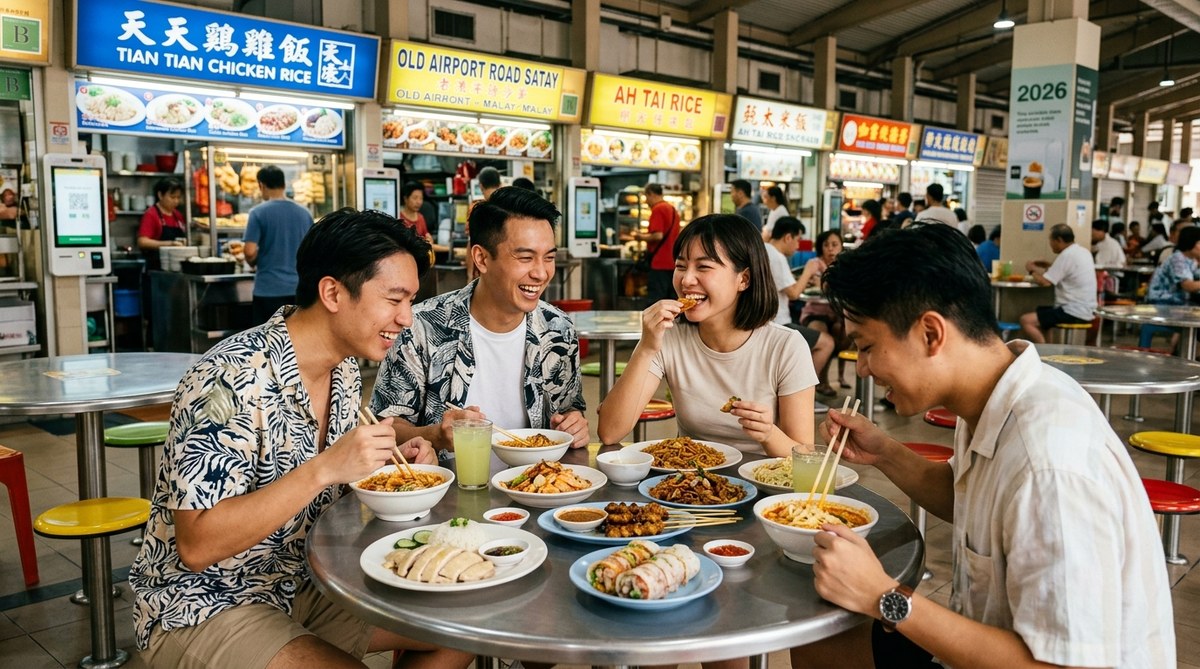
You land at Changi Airport, stomach growling, and the first thing you see is a glossy ad for a famous chili crab restaurant in a shopping mall. That crab might be good, but locals know the real magic happens under fluorescent lights at a hawker centre, with a plate of chicken rice that costs five dollars and tastes like heaven. In 2026, Singapore’s food scene is still buzzing with new openings, but the soul of the city remains in its humble kopitiams and bustling food courts. This guide will help you skip the tourist queues and eat where Singaporeans actually eat.
Eating like a local in Singapore means heading to hawker centres like Maxwell, Old Airport Road, and Tiong Bahru. Skip the famous chains and look for stalls with long queues of uncles and aunties. Order with confidence, use tissues to chope seats, and try dishes like carrot cake, laksa, and roti prata. Your taste buds and wallet will thank you.
Why Eating Like a Local Matters
Singapore is a food paradise, but the best meals don’t come with a fancy menu. Locals eat at hawker centres because they offer variety, authenticity, and value. A plate of Hainanese chicken rice from a Michelin Bib Gourmand stall costs less than a cappuccino. The flavours are bold, the ingredients fresh, and the atmosphere electric. When you eat where locals eat, you taste the real Singapore: a mix of Chinese, Malay, Indian, and Peranakan influences that have simmered for generations.
A Simple Process to Eat Like a Local
-
Pick the right hawker centre. Not all are created equal. Maxwell Food Centre and Old Airport Road Food Centre have legendary stalls. Chinatown Complex has the famous Michelin-starred hawker Liao Fan Hong Kong Soya Sauce Chicken Rice & Noodle. Tiong Bahru Market is smaller but packed with quality.
-
Watch the queues. A long line of Singaporeans is a guarantee of good food. Join it. Don’t be put off by the wait; it is usually fast because hawkers work at lightning speed.
-
Chope your seat first. Find an empty table, place a packet of tissue paper or a small bag on it to reserve your spot. This is the unofficial Singaporean way. If you don’t have tissue, a drink bottle works too.
-
Order confidently. Know the local names: “chicken rice” with dark soy and ginger, “char kway teow” with cockles, “roti prata” with curry. Smile and point at what you want if unsure.
-
Pay with cash or PayNow. Many old school stalls still prefer cash. Bring small denominations. Some have adopted QR codes for PayNow, but cash is king.
-
Share and sample. Hawker food is best shared. Order a few dishes for the table so you can try more.
Must Try Local Dishes for First Timers
- Hainanese chicken rice – Poached or roasted chicken on fragrant rice, served with chilli and ginger. The benchmark of any hawker centre.
- Char kway teow – Stir fried flat rice noodles with dark soy, prawns, Chinese sausage, and bean sprouts. Look for the wok hei (breath of the wok).
- Laksa – Spicy coconut curry noodle soup, usually with prawns and cockles. Katong Laksa is the famous version, but every hawker has their own.
- Roti prata – Crispy Indian flatbread, perfect with fish curry or sugar. Try the egg or cheese variations.
- Carrot cake (chai tow kway) – Not the Western carrot cake. This is steamed radish cake diced and fried with eggs, radish, and sweet or savoury sauce.
- Satay – Grilled meat skewers with peanut sauce, cucumber, and ketupat. Best eaten at Lau Pa Sat in the evening.
- Hokkien prawn mee – Yellow noodles with prawns, squid, and egg, in a rich prawn broth. Some stalls serve it wet, some dry.
Common Tourist Mistakes and How to Avoid Them
| Mistake | How to Avoid |
|---|---|
| Ordering at a famous tourist trap like Newton Food Centre (unless you want overpriced seafood). | Head to Old Airport Road or Maxwell instead. Newton is fine but locals rarely go there. |
| Using your phone to chope a table. | Use tissue packets or a drink. Phones can get stolen. |
| Eating at peak hours without a plan. | Go early (11am) or late (2pm) to avoid the lunch rush. |
| Not bringing cash. | Most hawker stalls do not accept cards. Withdraw money before you go. |
| Asking for “non spicy” at an authentic laksa stall. | Laksa is meant to be spicy. If you must, ask for less chilli, but you will miss the point. |
Expert Advice from a Local Food Blogger
“The best way to eat like a local is to follow the aunties and uncles. They know which stall has the freshest fish or the best gravy. If you see a queue of senior citizens, get in line immediately. Also, never judge a hawker centre by its appearance. Some of the best food comes from the oldest, dirtiest stalls. And always say ‘thank you’ after collecting your food. It goes a long way.” – Mei Ling, Singapore food writer and founder of Eat.Local.SG
Best Hawker Centres and Neighbourhoods for Authentic Food
Old Airport Road Food Centre is a favourite among locals for its variety. Try the satay bee hoon, the fried carrot cake, and the famous Toa Payoh Lorong 5 Rojak. It gets crowded at lunch, so arrive early.
Tiong Bahru Market is smaller but charming. The second storey hawker centre has a legendary fishball noodle stall and a watercress soup stall that warms the soul. Combine a food trip with a walk around the art deco neighbourhood.
Maxwell Food Centre is in Chinatown but less touristy than you might think. Tian Tian Hainanese Chicken Rice has a constant queue, but the stall next to it is almost as good and faster. Don’t miss the popiah (fresh spring rolls) from the stall near the escalator.
Chinatown Complex houses the world’s cheapest Michelin star meal. Be prepared to queue for at least 30 minutes for Liao Fan’s soya sauce chicken rice. While there, also try the dim sum and the roast meats from Hock Lam Street.
Geylang Serai Market is the heart of Malay food in Singapore. Try the nasi padang, soto ayam, and beef rendang. The atmosphere is vibrant and the portions generous.
Finding the Hidden Gems
Beyond the famous hawker centres, Singapore has countless hidden food gems. These are the stalls tucked away in housing estate coffee shops, run by the same family for decades. A good way to find them: ask a local taxi driver or look at food forums like Eatbook and SethLui. Another tip: visit during Ramadan bazaars or during festive seasons when special dishes appear. If you want a comprehensive list, check out our guide to
You can also follow a food trail that takes you through different neighbourhoods. The Katong and Joo Chiat area is perfect for Peranakan cuisine. The Little India area has amazing banana leaf rice and biryani. And the Telok Ayer area offers modern twists on traditional dishes. For a structured route, see
Your Local Food Journey Awaits
Eating like a local in Singapore is not complicated. It is about stepping away from the shiny restaurants and into the heart of the community. Bring a small appetite, an open mind, and a packet of tissues. Go to the places where the queues are long, the tables are sticky, and the flavours are unforgettable. You will leave with a full stomach and a deeper appreciation for Singapore’s culture. When you get back home, you will not just remember the skyline; you will remember the taste of a perfectly fried char kway teow. Start planning your food adventure today, and don’t forget to book a table at that famous Michelin hawker stall in advance. Happy eating!