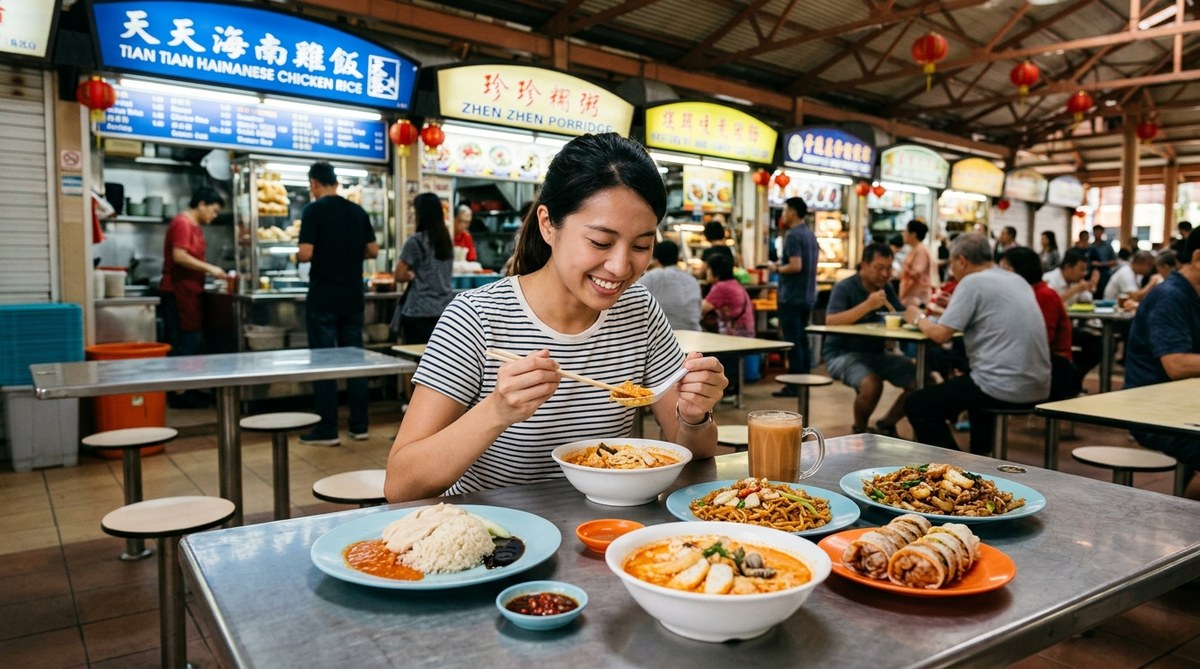
Singapore has a reputation. It is a fine city, they say. And yes, the fines for littering are real. But the biggest myth about Singapore is that you need a stack of cash to eat well. That is simply not true. The best food in Singapore does not come with a white tablecloth. It comes with a plastic spoon, a hot bowl, and a queue of office workers in white shirts. Here is exactly how to eat like a true Singaporean in 2026 without watching your bank account shrink.
Eating like a true local in Singapore is about understanding the hawker culture. Skip the fancy restaurants and head to a bustling hawker centre. Look for stalls with long queues of locals. Order classic dishes like Hainanese chicken rice, laksa, or carrot cake. Use tissue packets to chope seats. Always pay with cash or PayNow. A full meal with a drink costs around $5 to $7 SGD. This short guide shows you exactly how to eat well without breaking the bank in 2026.
The Golden Rule of Budget Eating in Singapore
Hawker centres are the backbone of Singaporean food culture. A report from 2026 confirms that over 80% of Singaporeans eat at a hawker centre at least once a week. Why? It is cheap, fast, and incredibly good.
A plate of chicken rice at a cool air conditioned restaurant can cost $15. The same plate, arguably better, at a hawker centre costs $4. The difference? Rental. Hawker centres are subsidised by the government. Stall owners pass the savings to you.
How to find the best stalls without any research:
- Look for the longest queue of locals.
- Avoid stalls with pictures of food that look too perfect.
- Listen for the sound of a wok. Loud wok hei (breath of the wok) means fresh, tasty food.
- Check if the stall is busy during off peak hours. A queue at 3pm is a very good sign.
For a deeper look at the best stalls around the island, check out our guide to where to eat in Singapore like a local in 2026.
Your First Hawker Centre Visit
If you are new to this, the process can feel chaotic. Do not worry. Follow these steps and you will fit right in.
- Identify the target. Walk the entire centre once. Look for stalls with the longest queues of local faces. Do not be shy. Join the queue.
- Master the art of choping (saving seats). You cannot eat standing up. Before you queue, find a table. Place a tissue pack, an umbrella, or a card on a seat. This is a national custom. Respect it.
- Order clearly. Have your cash ready. Say the dish number or name confidently. “One chicken rice, take away” or “One laksa, eat here”.
- Collect and enjoy. Listen for your order number. Grab your food, load up on chilli and soy sauce, and head to your choped seat.
- Clear your tray. In 2026, this is strictly enforced. Return your tray and crockery to the designated rack. It keeps the place clean and helps everyone.
“Do not be afraid of the queue. A long queue in Singapore means cheap, good food. It is the best sign you can get. If you see an aunty queuing patiently at 12pm on a Tuesday, you know that stall is the real deal.” – Jason Yeo, Singapore Food Blogger.
What to Eat When You Are on a Budget
Some dishes are naturally cheaper than others. Here is a table of the best value meals you can find across Singapore in 2026.
| Dish | Average Price (SGD) | Best Place to Try It |
|---|---|---|
| Hainanese Chicken Rice | $3.50 to $5.00 | Maxwell Food Centre or Boon Tong Kee |
| Laksa (Lemak) | $4.00 to $6.00 | 328 Katong Laksa or Janggut Laksa |
| Roti Prata (Plain) | $1.20 to $2.50 | Springleaf Prata Place or Sin Ming Roti Prata |
| Fried Carrot Cake (Black) | $3.00 to $4.50 | Newton Food Centre or Bedok Interchange |
| Wanton Mee | $4.00 to $5.00 | Coffee shops in Toa Payoh or Chinatown |
A drink like kopi-o or iced lemon tea usually adds $1.50 to $2.00 to your meal. Budget for it. Or better yet, carry a reusable water bottle. Singapore’s tap water is perfectly safe to drink.
For an extensive list of things to try, take a look at the top food experiences every Singapore visitor should try.
Common Tourist Mistakes That Drain Your Wallet
Many visitors leave Singapore thinking it is expensive. But they ate at the wrong places. Here is how to avoid their mistakes.
| The Mistake | The Cost | The Better Way |
|---|---|---|
| Eating at a restaurant in Clarke Quay | $30+ for a main course | Cross the bridge and eat at a hawker centre in the CBD |
| Buying bottled water from a convenience store | $2.00 for a small bottle | Carry a reusable bottle. Tap water is safe and free |
| Ordering the “set meal” at a fast food joint | $8.00 for a burger, fries, and a drink | Get a $4.00 plate of nasi lemak with more flavour |
| Always taking a Grab to eat | $15 for a 10 minute trip | Walk or take the MRT. Food is everywhere, you do not need to travel far |
| Only eating at famous tourist spots like Newton | Prices are jacked up for tourists | Go to a heartland hawker centre like Tiong Bahru or Old Airport Road |
If you want to try even more dishes without spending a lot, read our guide to uncover Singapore’s best local food spots off the beaten path.
How to Build Your Own $20 Food Day
You can eat six times a day in Singapore for under $20. Here is exactly how to plan a day of eating like a true Singaporean on a budget.
- Breakfast (7:00 AM): Head to a traditional kopitiam. Order kaya toast, two soft boiled eggs, and a kopi-o. Total: $4.50.
- Morning Snack (10:00 AM): Grab a curry puff from a snack cart or a bakery. Total: $2.00.
- Lunch (12:30 PM): Go to a hawker centre. Order a plate of chicken rice or a bowl of fishball noodles. Drink tap water. Total: $5.00.
- Afternoon Tea (3:00 PM): Share a bowl of ice kachang or chendol with a friend. Total: $2.50.
- Dinner (7:00 PM): Visit a coffee shop and order a plate of fried rice (nasi goreng) or prata with curry. Total: $6.00.
Total spend for the day: $20.00. You ate six times. You tried local flavours. You saved a fortune. This is exactly how to eat like a Singaporean on a budget.
For a more detailed look at morning meals, check out our guide to what Singaporeans really eat for breakfast.
Beyond the Hawker Centre: Other Cheap Eats
Hawker centres are the star of the show, but they are not the only option. Singapore has a few other budget friendly food sources.
Coffee shops (Kopitiams) are ubiquitous. You will find them in every housing estate. They serve simple dishes like prata, beehoon, and toast. A coffee shop prata is usually cheaper than a hawker centre version.
Food courts in shopping malls are also a good backup. They are air conditioned and a little cleaner. The prices are slightly higher than hawker centres, but still very reasonable. A meal at a food court costs around $6 to $8.
Supermarkets are a secret weapon for budget travellers. Giant and FairPrice sell hot food like nasi padang, pizza slices, and sushi. You can get a full meal for under $5.
If you have a sweet tooth, do not miss our list of 7 must try desserts only available in Singapore.
Final Tips for Eating Well Without Spending Much
Eating like a true Singaporean is a mindset. You are not paying for the plate or the waiter. You are paying for the taste and the speed.
- Always have cash. Many hawker stalls do not accept cards or PayNow.
- Be adventurous. If you do not know what a dish is, ask the person next to you in the queue. They will usually share their favourite order.
- Eat with your hands when eating roti prata or nasi lemak. It tastes better and you save on utensils. But wrap your rice in a plastic sheet first.
- Avoid eating at the airport or Changi Jewel unless you have to. The prices are heavily marked up for tourists.
For a full step by step breakdown of the entire city’s food scene, read our comprehensive guide to how to navigate Singapore’s hawker centres like a pro in 2026.
Your Wallet Will Thank You
You now have the blueprint. The next step is to put it into practice. Start with a single hawker centre. Walk around. Observe. Join a queue. You will be surprised at how far your dollar goes. If you are staying for a longer trip, consider staying in a neighbourhood with a good hawker centre nearby. Geylang, Toa Payoh, and Bedok are excellent bases for food lovers. Ready to eat your way through Singapore without breaking the bank? It is time to makan.