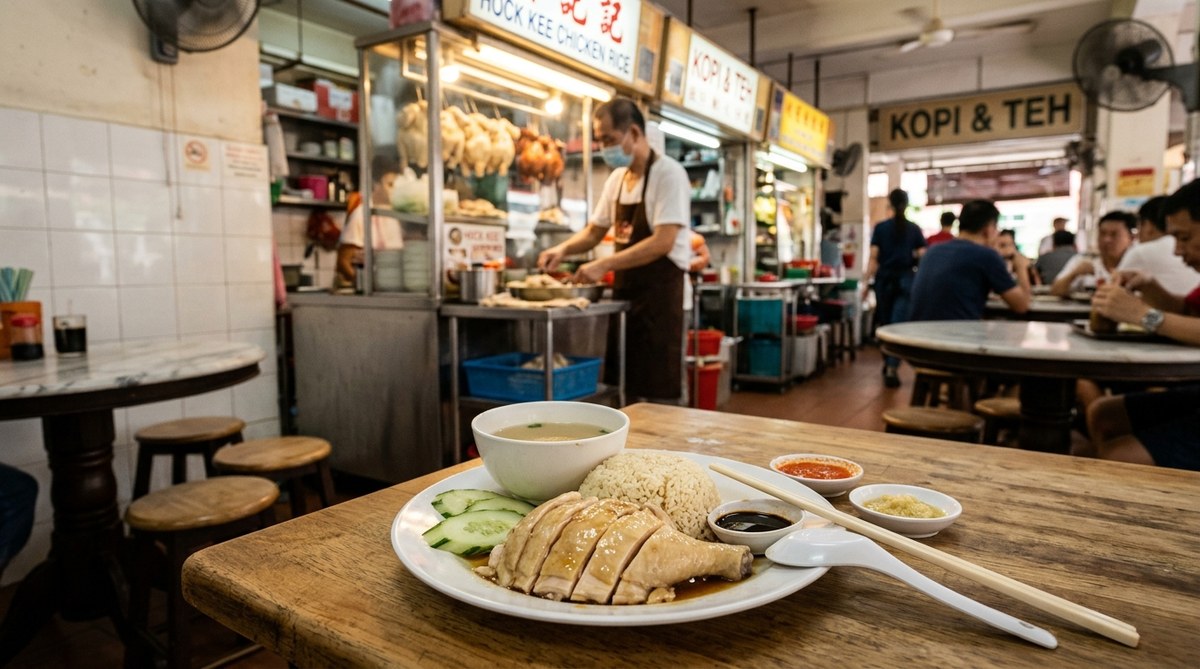
You are walking through a typical HDB estate in Singapore. The air smells like ginger, garlic, and pandan. You see a row of coffee shops, plastic chairs stacked outside, uncles reading newspapers, and a queue that snakes past a drinks stall. That queue is for chicken rice. Not at a restaurant with air conditioning and cloth napkins. At a coffee shop stall with a metal counter and a uncle who has been poaching birds for 40 years.
This is where the best chicken rice Singapore locals swear by is found. Not in a fancy dining room. Not at a hotel buffet. At a kopitiam with a worn out floor and a ceiling fan that wobbles.
Why do locals choose these humble spots over restaurants? The answer is simple. Focus, repetition, and a total lack of distraction. A coffee shop stall does one thing. It makes chicken rice. That is it. No pasta on the menu. No grilled salmon. No dessert list. Just rice, chicken, soup, and chilli. Day in and day out.
Restaurants have to please many palates. They spread their energy across a whole menu. A coffee shop stall pours everything into one plate. That singular focus creates the best chicken rice Singapore has to offer.
The best chicken rice Singapore locals love comes from coffee shop stalls, not restaurants. These stalls focus on one dish only. They use old school techniques like bone-in poaching and rendered chicken fat for the rice. You get a plate that costs under S$5, tastes incredible, and reflects decades of practice. Skip the tourist spots. Head to a kopitiam.
Why Coffee Shop Stalls Have the Edge
A coffee shop stall has one weapon. A single dish. The owner wakes up at 4am to prepare the birds. They check the temperature of the poaching water by feel. They know exactly when to plunge the chicken into ice water to get that jelly like skin. This is muscle memory built over thousands of birds.
A restaurant chef might cook chicken rice once a week. A coffee shop uncle cooks it every single day. That repetition builds a level of skill that no recipe book can teach.
Here is what a coffee shop stall does better:
- The rice. It is fried in rendered chicken fat with ginger and garlic before steaming. Restaurant versions sometimes cut corners with oil. Coffee shop stalls use the real fat because they render it themselves from the trimmings.
- The chilli. Fresh red chilli pounded with ginger and a splash of vinegar. No sugar syrup. No thickeners. Just heat and tang.
- The soup. Clear, light, and full of umami from boiling the chicken bones. Restaurants often serve a bland broth. Coffee shop stalls give you a bowl that tastes like the bird itself.
- The price. A plate at a coffee shop costs between S$3.50 and S$5. A restaurant charges S$12 to S$18 for the same thing. The quality is often higher at the cheaper spot.
How to Spot a Great Chicken Rice Coffee Shop Stall
Not every coffee shop stall is worth your time. Some are average. Some are legendary. Here is how to tell the difference before you order.
| What to Look For | What It Means | Common Mistake to Avoid |
|---|---|---|
| A long queue of locals | The stall has a loyal following. Tourists queue at restaurants. Locals queue at coffee shops. | Joining a short queue just because it is convenient. |
| The chicken is displayed with skin on | Bone in chicken with skin means they are using whole birds. | Ordering boneless chicken breast only. You lose flavour. |
| The rice is slightly oily and yellow | That is chicken fat. It is the sign of proper technique. | Eating at a stall where the rice looks white and dry. |
| The uncle uses a cleaver, not a slicer | Hand chopped chicken has better texture. Machine sliced chicken is mushy. | Assuming machine cut chicken is more hygienic. It is not. |
| The chilli is served in a metal bowl | They make it fresh daily. Plastic squeeze bottles mean factory made chilli. | Adding too much chilli before tasting the chicken first. |
The Technique That Makes Coffee Shop Chicken Rice Better
The secret is in the poaching. A coffee shop stall uses a method that restaurants rarely bother with. They bring a large pot of water to a boil. They add ginger, spring onion, and salt. Then they lower the whole chicken into the water. They turn off the heat and let the residual temperature cook the bird slowly.
This is called the off heat method. It keeps the breast meat tender. It ensures the thigh meat is cooked through but not dry. The chicken comes out silky, with a layer of jelly like fat under the skin.
Restaurants often boil the chicken on high heat to save time. The meat becomes tough. The skin tears. The texture is wrong.
“The chicken must never see a rolling boil after it goes in. That is the rule. If you see bubbles, you have already ruined the bird.” – Uncle Heng, coffee shop chicken rice stall owner in Toa Payoh for 38 years.
After poaching, the chicken goes into an ice bath. This shocks the skin and makes it firm and glossy. The stall then hangs the bird to drain. It is never refrigerated. Refrigeration dries out the skin and ruins the texture.
The Rice Is Not a Side Dish
Many visitors treat the rice as an afterthought. That is a mistake. In Singapore, the rice is half the experience. A great chicken rice stall puts as much effort into the grains as into the bird.
Here is how they do it:
- Wash the raw rice and drain it completely.
- Heat rendered chicken fat in a wok until it sizzles.
- Fry minced garlic and sliced ginger in the fat until fragrant.
- Add the rice and stir until every grain is coated.
- Pour in chicken stock from the poaching pot.
- Add a pinch of salt and a few pandan leaves.
- Steam the rice until fluffy.
The result is rice that is fragrant, slightly sticky, and rich without being greasy. Each grain stands alone. You can eat it plain and still be happy.
Restaurants sometimes use coconut oil or vegetable oil. It is cheaper. But it does not taste the same. The best chicken rice Singapore has to offer always uses real chicken fat.
The Chilli Is a Science
Coffee shop stalls treat their chilli with respect. They use fresh red finger chillies. They pound them with a mortar and pestle or use a stone grinder. No food processor. The texture matters.
They add a small piece of ginger. A clove of garlic. A pinch of salt. A dash of white vinegar. That is it. No sugar. No sesame oil. No oyster sauce.
The chilli should be bright red, slightly chunky, and aggressively sour. It cuts through the richness of the chicken and rice. It wakes up your palate.
Restaurant chilli is often sweet and smooth. It tastes like a condiment designed to offend nobody. Coffee shop chilli tastes like it was made by someone who wants you to feel something.
The Dark Soy Sauce and Ginger Paste
A proper chicken rice plate comes with three dipping sauces. The chilli. The dark soy sauce. And the ginger paste.
The dark soy sauce is thick, almost syrupy. It is not the same as regular soy sauce. It has been boiled with sugar until it turns rich and caramel like. A drizzle over the chicken adds sweetness and colour.
The ginger paste is finely pounded fresh ginger with a little oil and salt. It is not cooked. It is raw and sharp. It cleanses your palate between bites.
Coffee shop stalls make these from scratch. Restaurants often buy them pre packaged. You can taste the difference.
Why Tourists Miss the Best Chicken Rice
Most tourists end up at the same few places. They read a blog post or a magazine article. They go to a restaurant in a tourist district. They pay S$18 for a plate of chicken rice that is average at best.
Meanwhile, the best chicken rice Singapore has to offer is hiding in a coffee shop in a housing estate. No signboard in English. No Instagram friendly plating. Just a metal tray and a plastic bowl.
Locals know this. They do not go to restaurants for chicken rice. They go to the coffee shop near their block. The one where the uncle knows their order. The one where the chilli is made fresh every morning.
If you want to eat like a local, you need to change your mindset. You are not looking for a nice atmosphere. You are looking for a plate of food that has been perfected over decades.
How to Order Like a Local
Ordering at a coffee shop stall is different from ordering at a restaurant. There is no menu. There is no waiter. You walk up to the stall and speak directly to the person behind the counter.
Here is what you say:
- “One chicken rice, thigh.” Thigh meat is juicier and more flavourful. Breast meat is leaner and drier. Locals almost always order thigh.
- “Skin on.” Some stalls ask if you want the skin removed. Say no. The skin is the best part.
- “Extra chilli.” They will give you a larger portion of chilli on the side.
- “Soup.” The clear broth is usually included. If not, ask for a bowl.
Do not ask for boneless chicken. That is for people who do not trust themselves with bones. The bones add flavour. Pick the meat off the bone. It is part of the experience.
The Best Times to Go
Coffee shop stalls operate on a schedule. They open early and close when the chicken runs out. That is usually around 2pm or 3pm.
Go for lunch. That is when the chicken is freshest. The first batch is poached in the morning. The rice is hot. The soup is piping hot.
Avoid going after 1pm. The stall might be sold out. Or the chicken has been sitting out for hours. It will not be as good.
Some stalls open for dinner too. They poach a second batch in the late afternoon. But the morning batch is always better. The uncle is fresher. The focus is sharper.
What About the Famous Michelin Star Coffee Shop Stalls?
You have heard of the chicken rice stall that won a Michelin star. It is a coffee shop stall in Chinatown. The queue is insane. People wait an hour for a plate.
Is it the best chicken rice in Singapore? It is very good. But it is not the only one.
The Michelin star brought crowds. The stall had to scale up. They now cook more birds than ever before. The quality is still high, but some locals say it has dropped since the award.
The real magic is in the stalls that have not been discovered yet. The ones in Bedok. The ones in Ang Mo Kio. The ones in Clementi. These stalls have been making chicken rice for 30 years. They have no Michelin star. They have no queue of tourists. They just have perfect chicken rice.
If you want to find them, you need to explore. Walk into a coffee shop in a housing estate. Look for the stall with the longest queue. That is where the best chicken rice Singapore locals trust is served.
Why You Should Skip the Restaurant
Restaurants have overheads. Rent. Staff. Air conditioning. Marketing. All of that gets added to the price of your food.
A coffee shop stall has low overheads. The rent is cheaper. The staff is the family. The marketing is word of mouth. They can afford to use better ingredients because they are not paying for a fancy dining room.
The chicken at a coffee shop stall is often fresher. They buy whole birds from the market every morning. Restaurants sometimes buy frozen chicken to save money. Frozen chicken has a different texture. It is less juicy. The skin is not as firm.
The rice at a coffee shop stall is cooked in smaller batches. It is fresher. Restaurant rice is often cooked in large quantities and kept warm for hours. It dries out.
The chilli at a coffee shop stall is made daily. Restaurant chilli comes from a factory. It has preservatives.
The choice is clear. For the best chicken rice Singapore has to offer, go to a coffee shop.
Your Coffee Shop Chicken Rice Checklist
Before you head out, here is a summary of what to look for.
- A stall that only sells chicken rice. No other dishes.
- A queue of locals, not tourists.
- Chicken displayed with skin on, bone in.
- Rice that is yellow and slightly oily.
- Chilli that is bright red and sour.
- An uncle who has been doing this for decades.
- A price under S$5.
If the stall checks all these boxes, you have found a winner.
The Final Bite
The best chicken rice Singapore locals love is not at a restaurant. It is at a coffee shop. It is made by someone who has dedicated their life to a single dish. It is served on a plastic plate with a metal spoon. It costs less than a movie ticket. And it tastes better than anything you will find in a five star hotel.
Next time you are in Singapore, skip the guidebook recommendations. Go to a housing estate. Find a coffee shop. Join the queue. Order thigh with skin on. Add extra chilli. Eat it while sitting on a red plastic stool. That is the real Singapore chicken rice experience. And it is unforgettable.
For more hidden food spots, check out our guide to discovering the top hidden food gems in Singapore you must try. If you want to understand the full range of local flavours, read our ultimate guide to authentic local dishes in Singapore. And for a broader look at where to eat, see our tips on where to eat in Singapore like a local in 2026.
The Coffee Shop Chicken Rice Challenge
Here is a challenge for your next trip. Do not eat chicken rice at a restaurant. Not once. Only eat it at coffee shops. Try three different stalls in three different neighbourhoods. Compare the rice. Compare the chilli. Compare the texture of the chicken.
You will learn more about Singaporean food culture in three lunches than most tourists learn in a week. You will taste the difference that focus and repetition make. And you will understand why locals say the best chicken rice Singapore has is found in the most unassuming places.
Go find your stall. The uncle is waiting. The chicken is ready. Your plate costs S$4.50. Enjoy every bite.