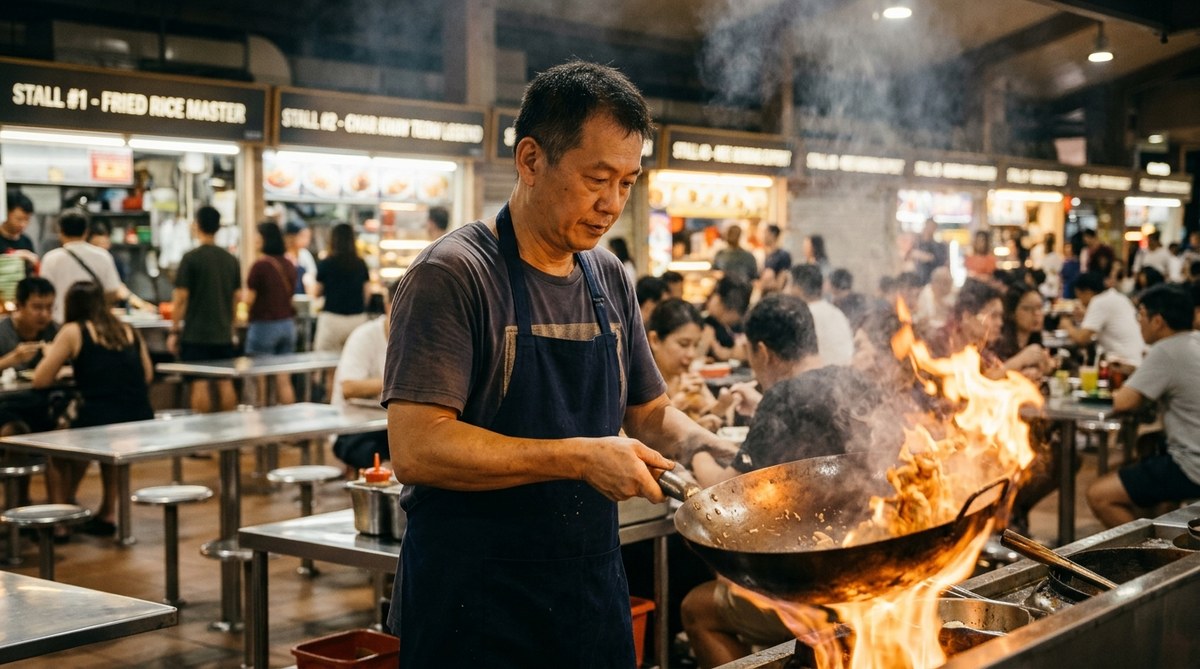
You know that moment when you are standing in front of a hawker stall and a wave of intensely smoky, savoury aroma hits you before you even see the food? That is the magic of wok hei. Translated as “breath of the wok,” it is the elusive, charred flavour that separates a good plate of char kway teow from an unforgettable one. For a culinary traveller in 2026, hunting down the best wok hei hawker stalls in Singapore is the ultimate food mission. It is not just about eating. It is about watching a master at work, wielding a heavy carbon steel wok over a roaring flame. This guide points you to the stalls that have perfected that fiery art.
Wok hei is the smoky soul of Singapore street food. To taste it at its peak, you need to visit stalls where the chef controls the flame like a conductor. This guide covers eight stalls across the island, from old favourites to newer contenders, each one a master of the wok. Bring cash, be ready to queue, and order the signature dish.
What Exactly Is Wok Hei? The Science Behind the Smoke
Before you queue up, it helps to understand what you are chasing. Wok hei is not just a burnt taste. It is a complex chemical reaction. When a chef tosses ingredients in a seasoned carbon steel wok over a very high flame, the oil reaches its smoke point. The food chars slightly. Amino acids and sugars caramelise. The result is a layered flavour that tastes savoury, smoky, and slightly sweet all at once.
A good hawker makes it look effortless. They slide the wok on and off the flame, flip noodles in the air, and control the heat with split-second timing. If the wok is too cool, you get soggy noodles. If it is too hot, you get bitter char. The best wok hei hawker stalls in Singapore hit that sweet spot every single time.
How to Spot a True Wok Hei Master
Not every stall that uses a wok is a master. Look for these signs:
- The chef uses a round-bottomed wok on a high-pressure gas burner.
- They work in small batches to maintain heat.
- You see a constant flame licking up the sides of the wok.
- The queue is often long, and the stall is busy during peak hours.
- The final dish has a slight smokiness that lingers on your palate.
If you see a stall using a flat griddle or a low flame, move on. You are not getting the real deal.
The 8 Best Wok Hei Hawker Stalls in Singapore for 2026
Here is our curated list of stalls that deliver that breath-of-fire experience. We have visited each one in the past year to confirm they still have the magic.
1. Hill Street Tai Hwa Pork Noodles (Lavender)
This is the stall that put Singapore hawker food on the Michelin map. Their bak chor mee is a lesson in texture. The vinegar-laced noodles are tossed with minced pork, mushrooms, and a crispy lard cracker. But the real star is the charred, smoky aroma from the wok. The chef works with intense focus, and the queue moves fast. Go early. By 2pm, they are often sold out.
Order this: Bak Chor Mee (dry style, spicy).
2. Outram Park Fried Kway Teow Mee (Hong Lim Complex)
This stall is legendary for a reason. The char kway teow here is dark, sticky, and loaded with cockles and Chinese sausage. The wok hei is aggressive. You can smell the smoke from the next block. The chef uses a mix of lard and oil, which adds richness. Expect a 30-minute wait during lunch. It is worth every second.
Order this: Char Kway Teow with extra cockles and egg.
3. Ah Heng Oyster Omelette (Bedok)
Oyster omelette is a tricky dish. Get the wok hei wrong, and you end up with a greasy pancake. Ah Heng gets it right. The batter is crispy on the outside, soft on the inside, and the oysters stay plump. The chef fries each portion individually, letting the wok breathe fire onto the egg mixture. It is a textural delight.
Order this: Oyster Omelette (large).
4. Geylang Claypot Rice (Geylang)
While not a noodle dish, the claypot rice here relies on wok hei in a different way. The rice is cooked in a claypot, but the chicken and lap cheong (Chinese sausage) are finished in a wok to get that smoky char. The result is a bowl of rice where every grain smells like a campfire. The queue is legendary, so bring patience.
Order this: Claypot Rice with chicken and salted egg.
5. Sin Huat Eating House (Geylang)
This is a late-night spot that has been serving seafood and tze char for decades. Their signature is the crab bee hoon. The vermicelli is wok-fried until it is crispy and smoky, then topped with a whole chilli crab. It is messy, decadent, and the wok hei is unmistakable. The stall opens late and closes when the ingredients run out.
Order this: Crab Bee Hoon.
6. Maxwell Fook Kin (Chinatown)
A newer stall that has quickly gained a following. The chef here trained under a veteran and brings a modern touch to classic dishes. Their Hokkien Mee is a standout. The thick yellow noodles are fried with prawns and squid, and the wok hei is present but balanced. It is less aggressive than some old-school stalls, making it a good entry point for first-timers.
Order this: Hokkien Mee.
7. Chomp Chomp Fried Hokkien Mee (Serangoon)
If you are looking for a supper spot, this is it. Chomp Chomp Food Centre is buzzing at night, and this stall is the main attraction. The Hokkien Mee here is fried with lard, giving it a deep, savoury flavour. The wok hei is strong enough to wake you up. The chef works fast, and the queue moves quickly even at midnight.
Order this: Fried Hokkien Mee.
8. Zion Road Fried Kway Teow (Zion Road)
Tucked inside a busy food centre, this stall has been around for decades. The char kway teow here is less sweet than some versions, with a stronger emphasis on the smoky flavour. The chef uses a mix of dark soy sauce and chilli, and the result is a plate that is savoury, spicy, and deeply charred. It is a favourite among locals who know their wok hei.
Order this: Char Kway Teow (ask for extra chilli).
A Handy Table: Wok Hei Techniques and Common Mistakes
To help you appreciate the craft even more, here is a breakdown of what makes wok hei work and what kills it.
| Technique | What It Does | Common Mistake |
|---|---|---|
| High heat | Charring and caramelisation | Using medium heat leads to soggy noodles |
| Small batches | Even heat distribution | Overcrowding the wok steams the food |
| Lard or high smoke point oil | Adds flavour and prevents burning | Using butter or low smoke point oil burns too fast |
| Constant tossing | Prevents burning and coats evenly | Leaving food still in the wok creates hot spots |
| Seasoned wok | Non-stick surface and flavour transfer | Using a new or unseasoned wok sticks and tastes metallic |
How to Order Like a Pro at a Wok Hei Stall
You have found the stall. Now do not mess it up. Follow this simple process:
- Check the queue. If there is no queue, it might be a slow day, or the stall might not be the best. A moderate queue is a good sign.
- Look at the wok. Is the flame high? Is the chef moving fast? If yes, you are in the right place.
- Order clearly. Say the dish name, any extras (extra egg, more chilli), and the portion size. Do not mumble.
- Pay and wait. Most stalls accept cash or PayNow. Have the exact change ready.
- Do not ask for less oil or less salt. You are messing with the chef’s formula. Trust the process.
- Eat immediately. Wok hei fades as the food cools. Eat it at the table right there.
“The best wok hei is the one you taste before you even take a bite. If the air around your plate smells like a barbecue, the chef did their job.” – Uncle Teo, retired hawker from Chinatown.
Why Wok Hei Matters for Your Singapore Food Trip in 2026
Singapore’s hawker culture was added to the UNESCO list for a reason. It is living heritage. Wok hei is the most dramatic expression of that heritage. It is not something you can get at a chain restaurant or a food court. It requires a master, a specific tool, and a very hot flame.
When you visit the best wok hei hawker stalls in Singapore, you are not just eating noodles. You are watching a performance. The chef is sweating, the flame is roaring, and the smoke is billowing. That is the experience. That is the memory you take home.
For more spots to fill your itinerary, check out our guide to authentic local dishes in Singapore. If you are planning a whole food tour, we also have a list of hidden food gems in Singapore that are worth your time.
Your Wok Hei Checklist for 2026
Before you head out, keep these points in mind:
- Bring a small umbrella if you are queueing outdoors. The weather in Singapore changes fast.
- Wear clothes you do not mind smelling like smoke. The aroma clings to fabric.
- Go with a friend so one person can chope (reserve) a table while the other queues.
- Do not visit between 2pm and 5pm. Many stalls close after lunch and reopen for dinner.
- If you see a stall using a portable butane stove, skip it. Real wok hei needs a fixed gas line.
Chasing the Breath of the Wok
Wok hei is not a trend. It is a tradition that has been passed down through generations. In 2026, as new hawkers take over from their parents, the quality can vary. But the stalls on this list have kept the flame alive. They are the keepers of the craft.
So go. Queue up. Watch the wok. Smell the smoke. Taste the fire. That is the real Singapore.