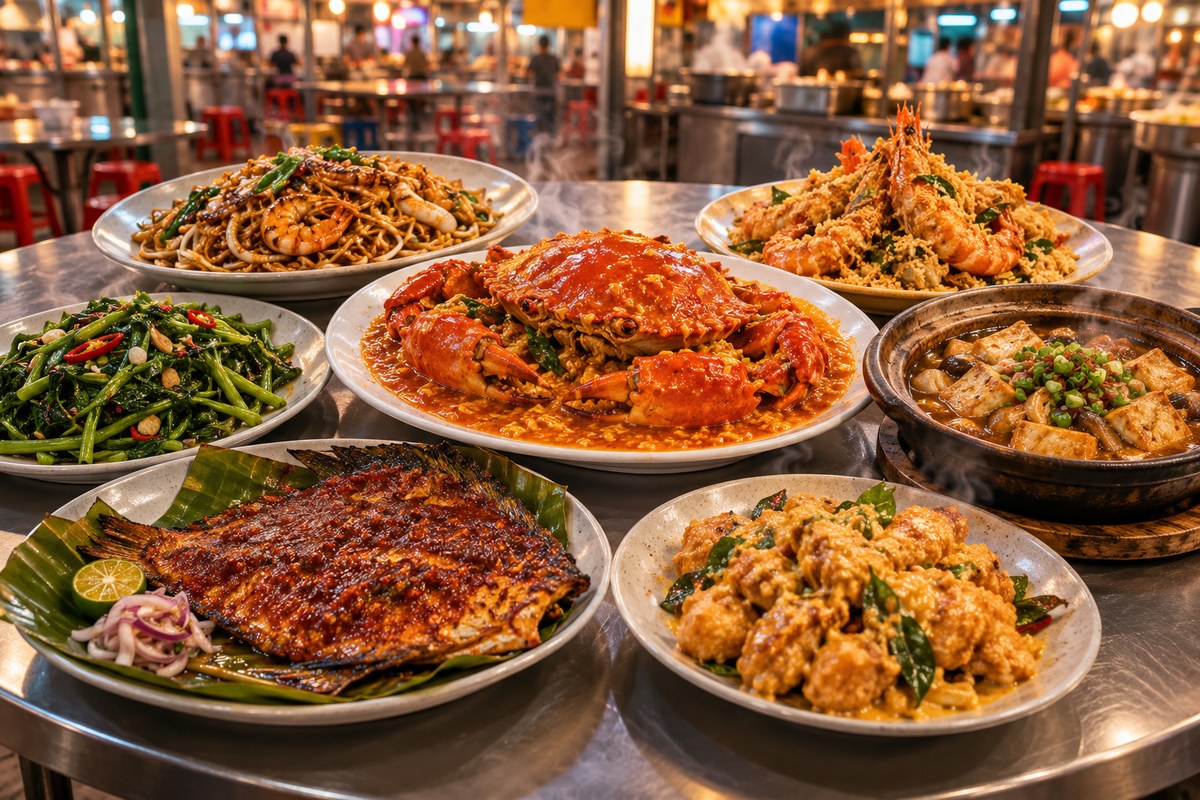
Your Friday night dilemma is real. You want a proper dinner. A plate of sambal kang kong that crackles with wok hei. A bowl of claypot curry fish head that feeds four. But the restaurant bill? It always stings. A meal at a mid range Chinese restaurant in Singapore can easily hit S$80 per person these days, especially after GST and service charge.
What if you could get that same quality for S$8 a dish? You can. The best tze char stalls in Singapore have been quietly serving food that rivals any air conditioned restaurant. They use the same ingredients. They employ cooks with decades of experience. And they charge a fraction of the price. The difference is simple: no rent for a fancy Orchard Road unit, no sommelier, no mood lighting. Just a wok, a flame, and skill.
We visited dozens of stalls across the island to find the ones that truly taste better than a restaurant meal. Here are seven that deliver.
The best tze char stalls in Singapore prove that a formal dining room does not guarantee better food. These seven hawker stalls use restaurant grade ingredients, masterful wok hei techniques, and recipes perfected over generations. Expect to pay between S$6 and S$15 per dish. Bring cash. Arrive before 6pm to avoid the dinner rush. Your taste buds will thank you, and your wallet will too.
Why Tze Char Stalls Beat Restaurants
You might think a restaurant kitchen has better equipment. In many cases, the opposite is true. Hawker stall woks sit over powerful gas burners that can reach temperatures most restaurant kitchens cannot match. That intense heat creates wok hei, the smoky, charred flavour that makes tze char so addictive.
Restaurants also have overheads. A stall in a kopitiam pays a fraction of the rent. That saving goes straight into the ingredients. Many stall owners buy their seafood from the same wet market suppliers that deliver to high end restaurants. You are eating the same fish, just without the S$40 markup.
Here is a breakdown of what changes when you switch from restaurant to hawker stall:
| Factor | Restaurant | Tze Char Stall |
|---|---|---|
| Price per main dish | S$18 to S$45 | S$6 to S$15 |
| Wok hei intensity | Moderate | High |
| Waiting time | 15 to 30 minutes | 20 to 40 minutes |
| Ambience | Air conditioned, table service | Open air, self service |
| Corkage / service charge | Yes (10% often) | None |
The trade off is simple. You lose air conditioning. You gain flavour and savings.
How to Order Like a Pro at a Tze Char Stall
If you are new to the tze char scene, the process can feel chaotic. You walk up to the stall. There is no host. No menu handed to you. Here is a simple method to get it right every time.
- Look for the queue. The best stalls have a line. Join it. Do not be tempted by the empty stall next door.
- Check the display. Most stalls have a cold cabinet showing raw ingredients. Point at what you want. The uncle or auntie will nod.
- Specify your preferences. Say “less oil” or “more chilli” clearly. They will remember.
- Get a table number. Some stalls give you a number. Others expect you to find a seat first. Ask the person at the counter.
- Pay when food arrives. Most stalls settle the bill after you eat. Some ask for payment upfront. Have cash ready. Many do not accept PayNow or cards.
- Share everything. Tze char is meant for sharing. Order one fried dish, one vegetable, one soup, and one rice or noodle dish for two people.
The 7 Best Tze Char Stalls in Singapore for 2026
1. Swee Guan Hainanese Chicken Rice (Tiong Bahru)
Do not let the name fool you. This stall in Tiong Bahru Market does excellent tze char beyond chicken rice. Their Hainanese pork chop is a standout. A thick patty of minced pork, breaded and fried, served with a rich tomato based gravy. It tastes like something your grandmother made, if your grandmother was a professional chef.
The queue moves fast. Go on a weekday for a shorter wait.
2. Kok Sen Restaurant (Geylang)
Kok Sen operates out of a coffee shop on Geylang Road. Their hor fun is legendary. Flat rice noodles in a light, savoury gravy with slices of fish and prawns. The texture is silky. The portion is generous. At S$6 for a large plate, it is one of the best value meals in Singapore.
They also do a mean cereal prawn. The coating is crunchy without being greasy.
3. G7 Seafood (Old Airport Road)
Located in the Old Airport Road Food Centre, G7 Seafood is famous for one dish: sambal stingray. The stingray is fresh. The sambal is spicy, tangy, and slightly sweet. It comes wrapped in banana leaf, adding a subtle aroma.
Order the kang kong belacan on the side. The vegetable is crisp, not soggy. Pair it with a cold bottle of Tiger beer.
4. Eng’s Char Siew Wan Li (Toa Payoh)
This stall hides in a coffeeshop along Lorong 4 Toa Payoh. Their signature is char siew with a twist. The pork belly is roasted twice. First over charcoal, then finished in a wok with honey and soy. The skin shatters when you bite into it.
They also serve a mean orh luak (fried oyster omelette). The oysters are plump. The batter is thin and crispy.
5. Sin Huat Seafood (Geylang)
Sin Huat is not for the faint of heart. It is expensive by hawker standards, with some dishes hitting S$30. But their white bee hoon is worth every cent. The noodles are drenched in a creamy, savoury sauce made from crab fat and prawn stock. It is rich. It is decadent. It is unforgettable.
Bring a group of four. Share the bee hoon, a plate of fried chicken wings, and the sambal petai.
6. Hong Heng Seafood (Bedok)
Hong Heng operates out of a coffeeshop near Bedok Interchange. Their claypot tofu is a sleeper hit. Soft silken tofu in a savoury broth with minced pork, mushrooms, and spring onions. It is comfort food at its finest.
Their assam fish head is also excellent. The broth is sour and spicy, with chunks of ladyfinger (okra) that soak up all the flavour.
7. Lian He Seafood (Whampoa)
Lian He sits in Whampoa Food Centre. Their Hokkien prawn mee is a classic. Thick yellow noodles and thin bee hoon in a rich prawn stock. The soup is dark and flavourful, not watery like some versions.
They also do a mean ngoh hiang. The rolls are packed with minced pork and water chestnuts, wrapped in beancurd skin, and fried to a deep golden brown. Dip it in the house made chilli sauce.
Common Mistakes When Eating Tze Char
Even seasoned foodies make errors at tze char stalls. Here are the most common ones, and how to avoid them.
| Mistake | Why It Hurts | How to Fix It |
|---|---|---|
| Ordering too many dishes | Food gets cold. You overpay. | Stick to three dishes for two people. |
| Going at peak dinner time (7pm to 8pm) | 45 minute wait for food. | Arrive at 5.30pm or after 8.30pm. |
| Not specifying spice level | You get default heat. | Say “medium spice” or “less chilli” clearly. |
| Paying with card only | Many stalls are cash only. | Carry S$50 in cash. |
| Ordering just one rice per person | Tze char is meant for sharing. | Order one rice or noodle dish per two people. |
“The biggest mistake people make is ordering too much. Tze char is about balance. One fried dish, one wet dish, one vegetable. That is the formula.” Uncle Tan, owner of Kok Sen Restaurant, Geylang.
What to Look for in a Great Tze Char Stall
Not all stalls are created equal. Here are the signs that a stall delivers restaurant quality food.
The queue test. If there is a line of aunties and uncles, you are in the right place. Locals know where to eat. Trust them.
The wok hei smell. Walk past the stall. If you smell smoky, charred goodness, that is wok hei. It means the cook uses a seasoned wok at high heat.
Fresh ingredients. Look at the display cabinet. Are the prawns grey or pink? Grey is fresh. Pink means they have been sitting out. Walk away.
The cook’s age. This is not ageist. It is practical. A cook who has been working a wok for 20 years knows how to season a dish. Young cooks often lack the instinct.
No air conditioning. This sounds counterintuitive. But stalls that spend money on a fancy setup often cut corners on ingredients. A simple fan cooled kopitiam is usually a better bet.
How Tze Char Stalls Keep Prices Low
The economics are straightforward. A stall in a hawker centre pays around S$1,000 to S$3,000 a month in rent. A restaurant in a mall pays S$15,000 to S$30,000. That difference shows up on your plate.
Stalls also operate with smaller teams. A husband and wife team can run a successful stall. They do not need a manager, a host, or a dishwasher. Everyone works. The savings go into the food.
Many stall owners buy their ingredients directly from wholesale markets like Pasir Panjang or Geylang Serai. They get better prices than restaurants that order through distributors. That means fresher seafood and better cuts of meat for less money.
The Best Times to Visit Tze Char Stalls
Timing matters. Here is a schedule that works.
- Lunch (11am to 1pm). Some stalls open for lunch. The selection is smaller but the queue is shorter.
- Early dinner (5pm to 6.30pm). This is the sweet spot. The stalls are fully stocked. The crowd has not arrived. You get your food in 15 minutes.
- Late dinner (8.30pm to 9.30pm). Many stalls close by 10pm. The last order is usually 9.30pm. You might miss some dishes, but the wait is shorter.
- Weekends. Avoid Saturdays and Sundays unless you enjoy queuing for 40 minutes. Go on a Tuesday or Wednesday for the best experience.
If you want to learn more about navigating Singapore’s food scene like a local, check out our guide on how to navigate Singapore’s hawker centres like a pro in 2026.
Why These Stalls Are Better Than Restaurants
Let us be honest. A restaurant offers convenience. You sit down. A server brings water. The air conditioning works. But the food? It is often mass produced. Many restaurants use frozen ingredients. They par cook dishes and reheat them. The wok hei is missing.
Tze char stalls cook everything to order. Your plate of sambal kang kong goes into the wok only after you order it. The cook adjusts the heat, the seasoning, and the timing for each dish. That is why the food tastes better.
There is also an honesty to tze char. No plating tricks. No foam. No edible flowers. Just good food on a plate. It is the kind of cooking that feeds families. It is the kind of food that makes you feel full and happy.
Your New Weekend Dinner Plan
Here is a suggestion. Next Friday, skip the restaurant reservation. Grab S$50 cash. Head to one of the stalls above. Order three dishes. Share them with a friend or partner. Eat with your hands if you want. No one judges at a hawker centre.
You will spend around S$25 for two people. You will eat food that tastes like it came from a S$100 per person restaurant. And you will wonder why you ever paid for air conditioning.
If you are looking for more hidden gems, read our guide on why these 8 hidden hawker stalls in Singapore are worth the queue in 2026. Your next great meal is waiting at a plastic table under a fluorescent light. Go find it.